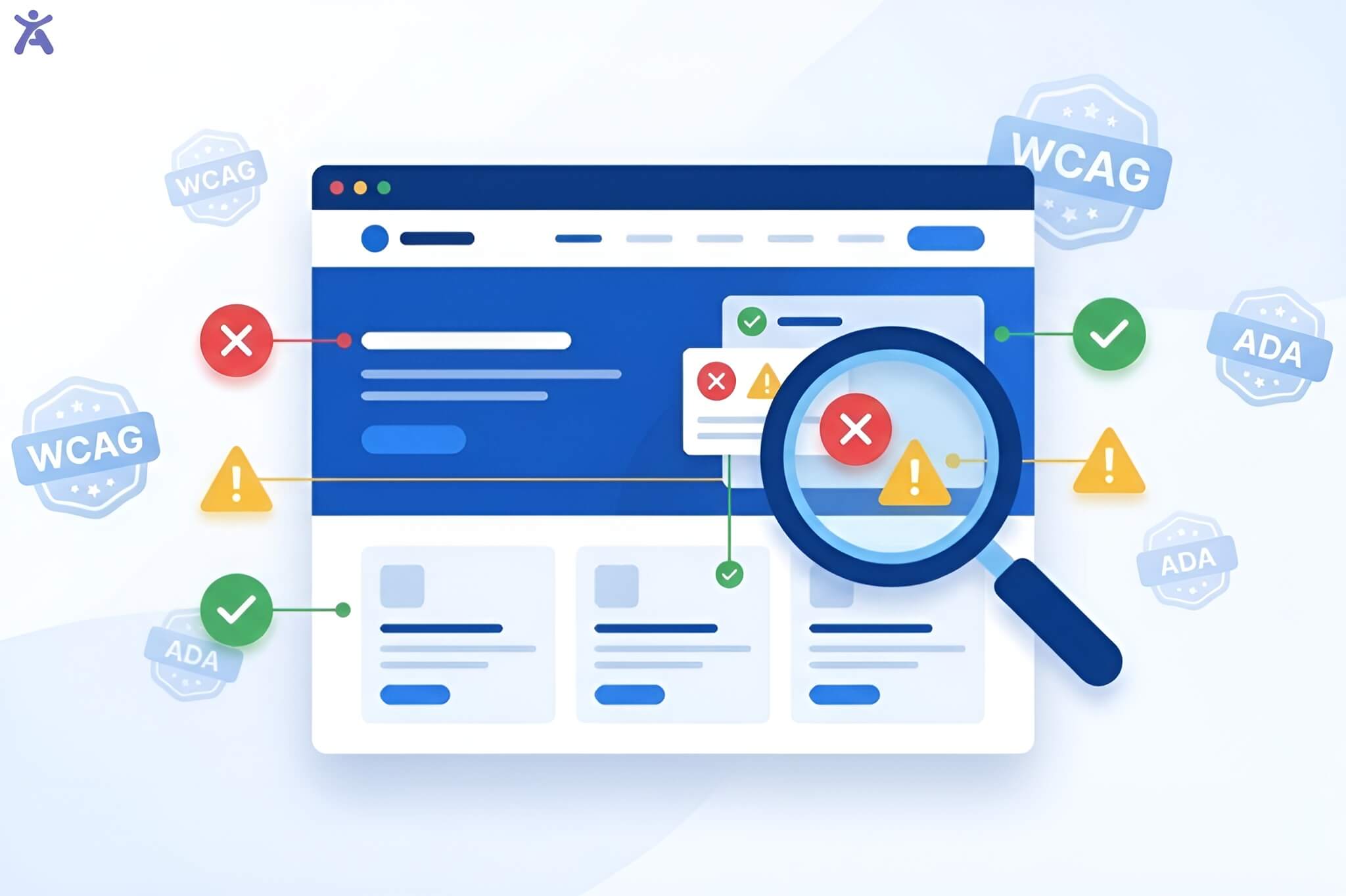
As we move through 2025, the digital landscape has encountered a “web accessibility specialists” of regulatory enforcement and aggressive litigation. Data indicates that ADA-related digital accessibility lawsuits are on track to surge by 20% this year, with total filings projected to exceed 5,100 cases. This is no longer merely a quantitative increase; it is a strategic shift into state-level jurisdictions.
While New York and Florida remain hotspots, we are witnessing a massive 746% spike in litigation in Illinois. This surge is driven by a “nexus” advantage in state courts and a desire by plaintiff firms to avoid the judicial fatigue common in federal circuits.
Quick Summary
Simultaneously, the regulatory window has closed: the European Accessibility Act (EAA) reached its critical enforcement deadline on June 28, 2025, mandating that all digital products from e-commerce to banking meet WCAG 2.1 AA standards for the EU market. For technical leaders, the message is clear: ignoring accessibility is now an unquantifiable legal and operational risk. At accessify.app, we partner with organizations to navigate this landscape, moving beyond superficial patches toward a core architectural requirement of inclusive design.
Why Overlays are a Liability, not a Solution

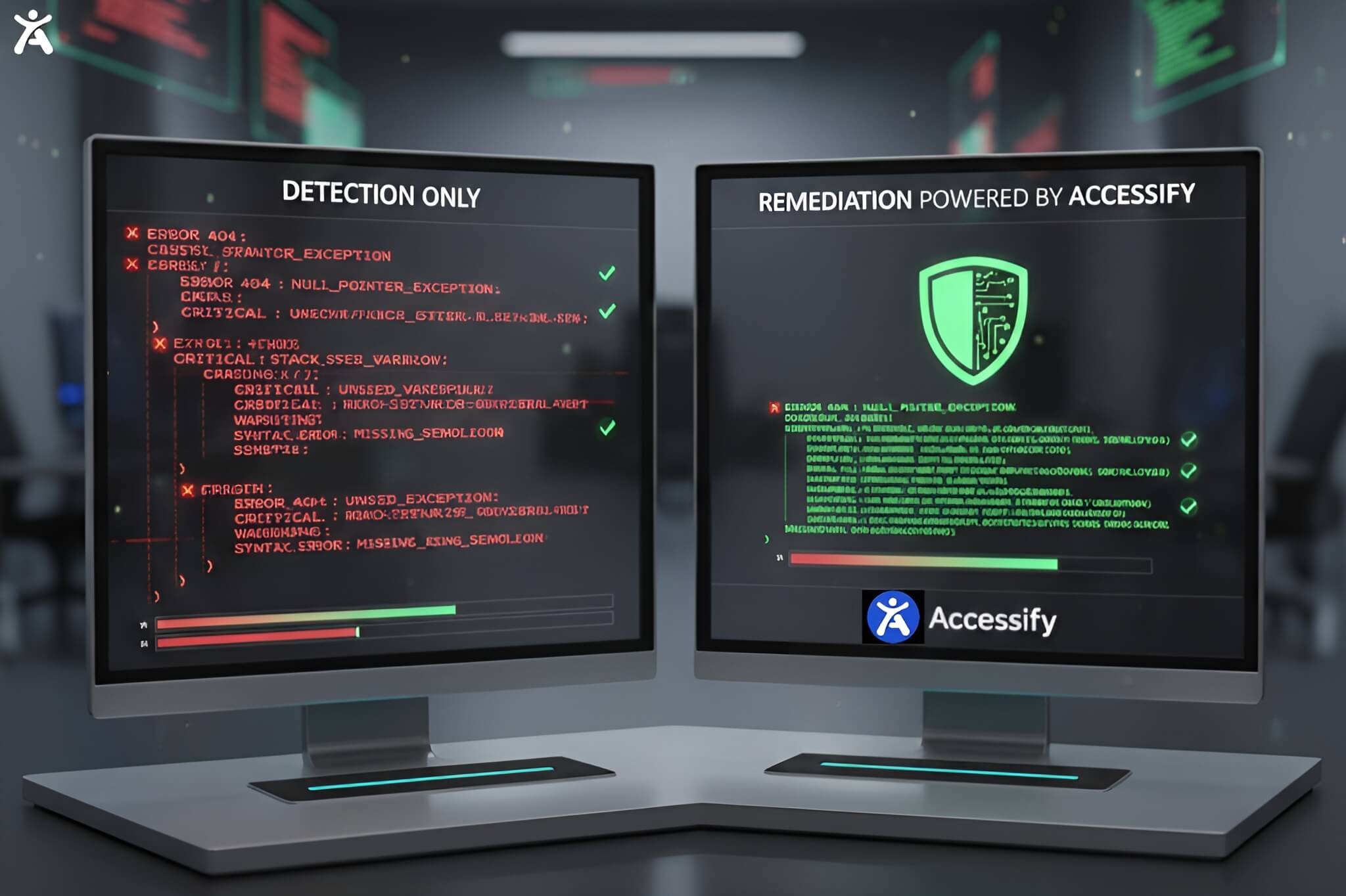
Many vendors promise an “instant fix” via AI-powered accessibility widgets or overlays. As a technical leader, you must recognize these for what they are: superficial client-side injections that create a facade of compliance while leaving the underlying DOM (Document Object Model) fractured. These tools typically remediate only 20–40% of common accessibility issues, missing critical structural requirements like semantic heading hierarchies and form labeling.
More dangerously, these scripts frequently conflict with a user’s native assistive technology (AT). They introduce “keyboard traps” and overwrite correctly implemented native HTML, rendering once-navigable pages unusable. The legal community has identified this vulnerability; since early 2024, over 1,000 lawsuits have specifically targeted companies relying on overlays.
Technical Alert
In early 2025, the Federal Trade Commission (FTC) reached a $1 million settlement with a major overlay vendor. The complaint alleged not only technical failure but also “deceptive claims” regarding WCAG compliance and “astroturfing” the failure to disclose material connections to reviewers who provided supposedly independent positive opinions.
True technical robustness is achieved only at the source-code level. “Accessible by design” is the only path that mitigates vendor risk and ensures architectural integrity.
The ROI of Semantic Clarity
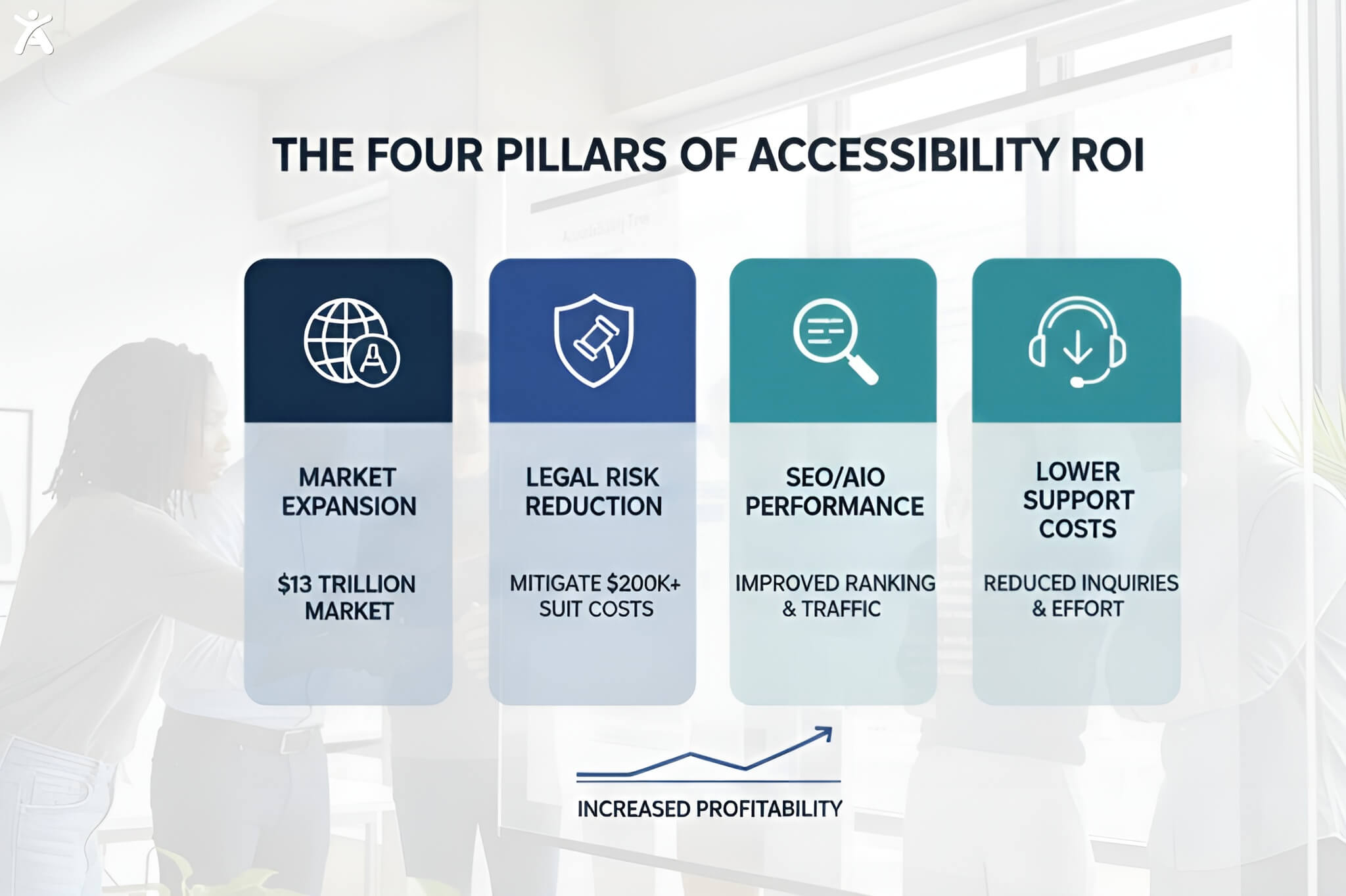
Accessibility is frequently miscategorized as a cost center when it is, in fact, a growth strategy. A 2025 SEMrush study of 10,000 websites revealed that WCAG-compliant sites gained an average of 23% more organic traffic and ranked for 27% more keywords than non-compliant counterparts.
SEO and the “Agentic Web”
This performance gain is rooted in semantic clarity. The requirements for accessibility structured HTML, clear hierarchies, and robust metadata are the exact signals used by search engine crawlers and, crucially, the “Agentic Web.” We have entered an era where AI agents (like ChatGPT and Perplexity) serve as primary users. These agents parse sites identically to screen readers. By optimizing for accessibility, you are engaging in Artificial Intelligence Optimization (AIO). While non-compliant sites are losing 20–30% of traffic to AI search tools, WCAG-compliant sites are seeing gains, creating a “43-point swing” in competitive advantage. Accessibility is no longer just for humans; it is the foundation for how AI indexes your brand.
When to Hire web accessibility specialist
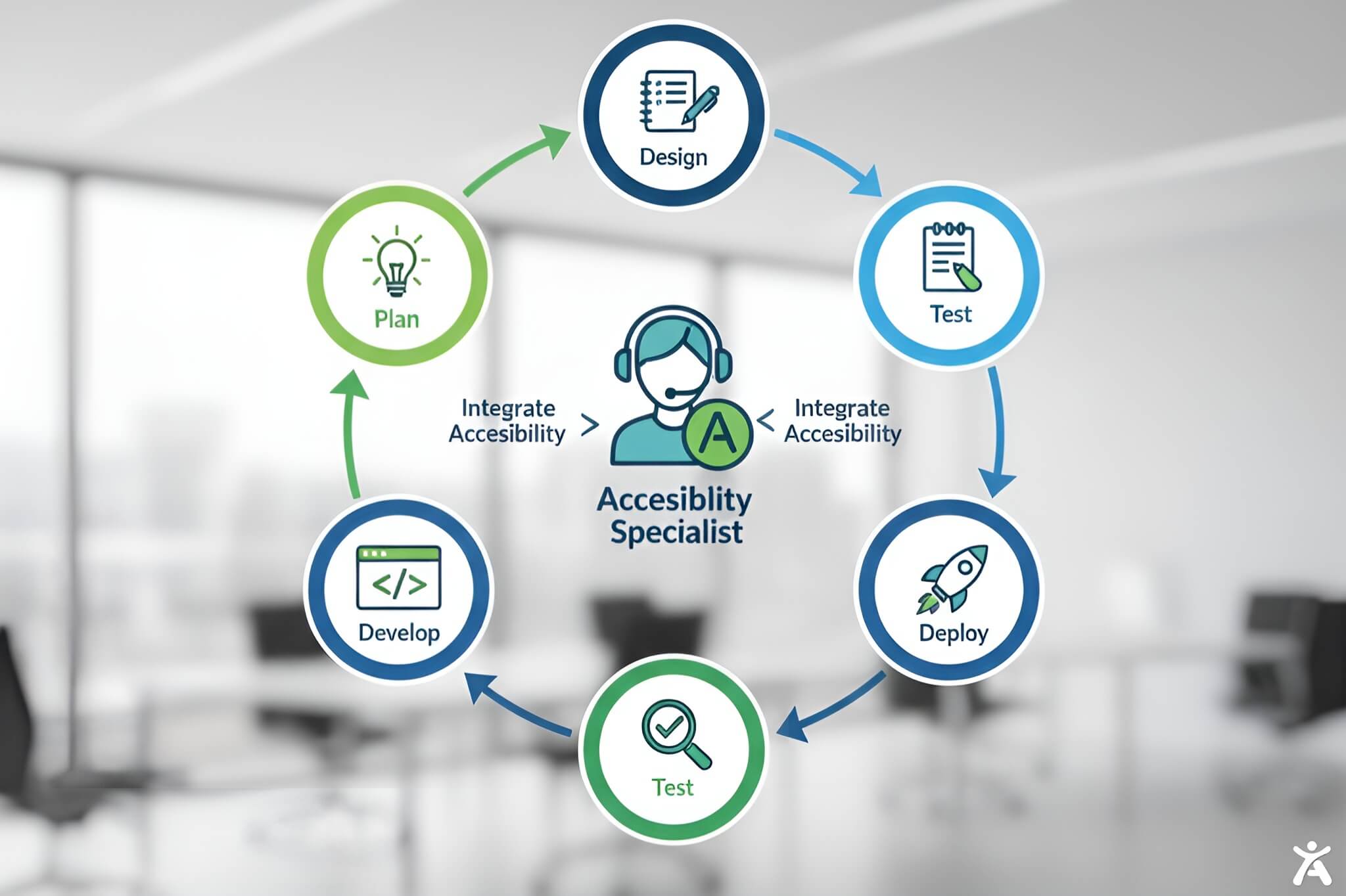
Strategic Scenarios for Specialist Intervention
Automated tools are useful for high-velocity CI/CD checks, but they miss approximately 70% of accessibility barriers. Specialized human expertise is non-negotiable in high-risk scenarios where subjective user-journey evaluation is required:
1• Complex WAI-ARIA Widgets: Custom elements such as tree grids, multi-level menus, and sliders require expert role and state management. Incorrect ARIA usage is often more disruptive than no ARIA at all.
2• Multi-step Transactional Flows: Checkout processes and secure authenticated states require precise focus handling in modal dialogs and dynamic error validation to prevent cart abandonment.
3• Mobile App Accessibility: Implementing “accessible names” and “traits” for native iOS (VoiceOver) and Android (TalkBack) environments requires specialized knowledge of mobile-specific accessibility APIs.
4• Interactive Multimedia: Ensuring synchronized audio descriptions and keyboard-accessible video players.
To manage these risks, specialists utilize objective frameworks like the “Risk Factor Formula” (based on real-world complaint data) and the “User Impact Formula” to prioritize the development backlog based on actual barrier severity rather than arbitrary scan results.
When evaluating technical talent to lead remediation, the International Association of Accessibility Professionals (IAAP) certifications serve as the industry benchmark.
|
Credential
|
Focus
|
Ideal Role
|
Prerequisites
|
|
CPACC
|
Foundational/Management: Knowledge of disabilities, universal design, and global laws.
|
Product Managers, DEI Directors, Compliance Officers.
|
1 year of experience in accessibility or universal design.
|
|
WAS
|
Technical/Hands-on Code: Proficiency in WCAG, ARIA, and AT testing (Screen Readers).
|
Senior Developers, QA Engineers, Technical Leads.
|
3 years of hands-on technical accessibility experience.
|
|
CPWA
|
Expert (Combined): Represents mastery of both strategy and technical execution.
|
Accessibility Architects, Lead Consultants, CTO Advisors.
|
Must hold and maintain both CPACC and WAS credentials.
|
The CPWA is the “Gold Standard,” identifying professionals capable of bridging the gap between high-level risk mitigation and low-level code remediation.
The Cost of Technical Debt
The economics of accessibility are unforgiving. In high-risk environments, engineering teams can spend up to 42% of their velocity managing technical debt. When accessibility is treated as a “retrofit” for code already in production, the cost of remediation is up to 100 times higher than if it had been integrated during the initial design phase.
By “Shifting Left” integrating a specialist into the earliest stages of the SDLC you establish accessible component libraries and design patterns that prevent bugs from ever reaching the main branch. This proactive inclusion reduces developer friction, ensures your “definition of done” is legally defensible, and transforms accessibility into a dynamic driver of product quality.
Engineering an Inclusive Future
The industry has moved beyond reactive remediation. As a CTO, the technical maturity and future-readiness of your platform depend on your ability to treat accessibility as a core architectural requirement.
Is your digital architecture ready for a world where your primary “users” might be AI agents, and where human users demand and deserve unfettered access? Partner with technical experts who understand that inclusion is not a widget, but an engineering discipline. Visit accessify.app to review our technical audit frameworks and secure your architecture for the agentic web.
FAQs
1. What is the difference between a web accessibility specialist and a standard QA tester?
A web accessibility specialist possesses deep expertise in WCAG criteria and the technical behavior of assistive technologies (AT). While a standard QA tester verifies general functionality, a specialist evaluates the “usability and perceivability” of the interface, using screen readers and manual keyboard testing to identify barriers that automated scripts miss.
2. Why did the FTC fine a major accessibility overlay vendor?
The FTC issued a $1 million fine for “deceptive claims” regarding the product’s ability to ensure WCAG compliance. The investigation also revealed the vendor engaged in “astroturfing” failing to disclose material connections to reviewers who provided positive feedback, thus misleading customers about the product’s effectiveness.
3. How does WCAG compliance directly improve SEO rankings?
WCAG compliance requires semantic HTML, clear heading structures, and descriptive alt text. These are the primary signals search engines and AI agents use to index content. Compliant sites see a 23% gain in organic traffic because their architecture is optimized for both human users and AI-driven “Artificial Intelligence Optimization” (AIO).
4. What are the most recognized IAAP certifications for developers?
The Web Accessibility Specialist (WAS) is the primary technical certification, requiring three years of documented hands-on experience. The Certified Professional in Web Accessibility (CPWA) is the highest credential, combining technical WAS expertise with foundational CPACC management knowledge.
5. Does using an accessibility widget protect my company from ADA lawsuits?
No. Over 1,000 lawsuits have targeted companies using overlays since early 2024. Courts have consistently ruled that simulating accessibility through client-side widgets is not a substitute for source-code compliance and does not provide a legal “safe harbor.”