

“can AI make a website fully accessible”
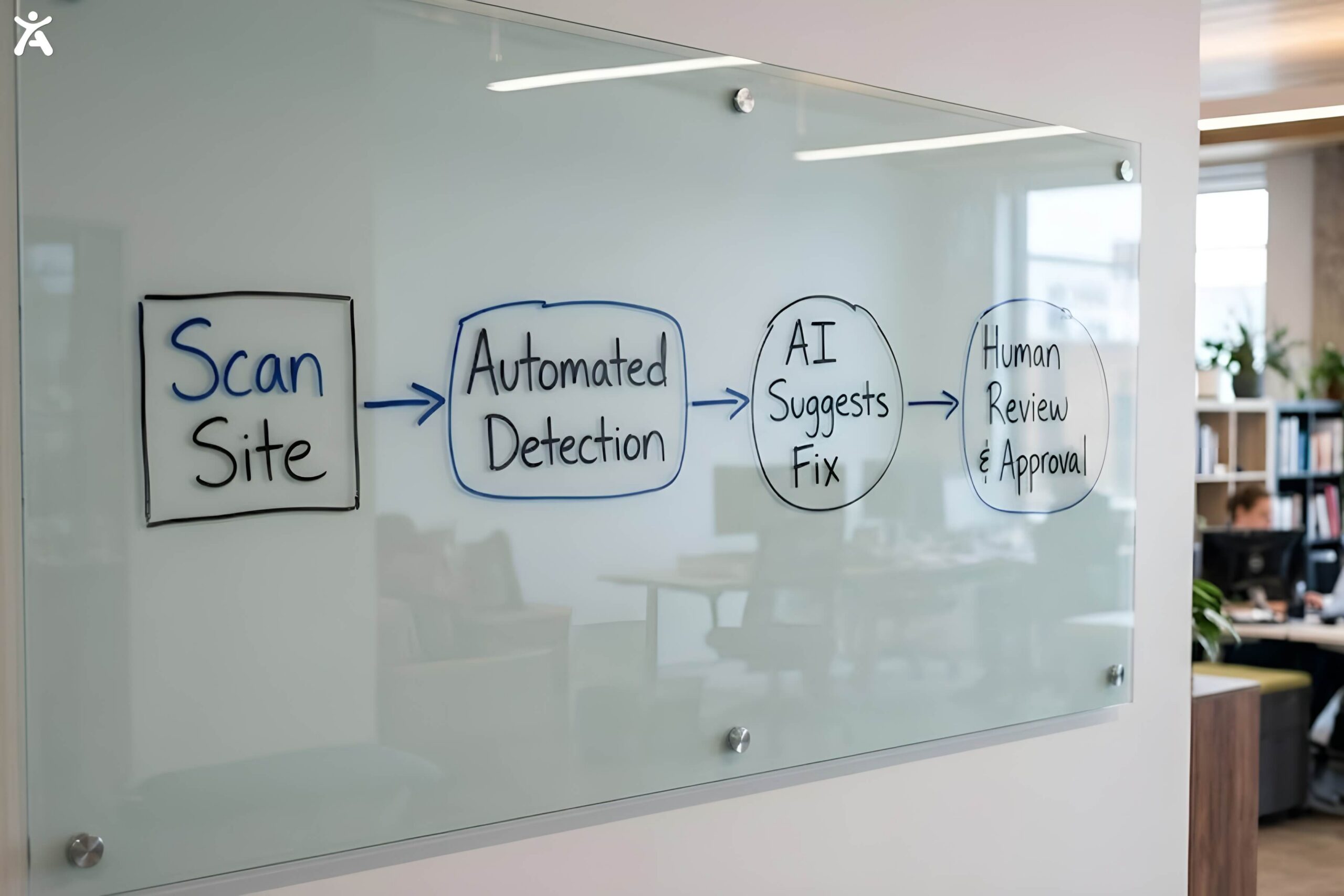
No, AI alone cannot make a website fully accessible. AI tools are genuinely useful for speeding up detection, drafting alt text, and applying certain automatic fixes like contrast adjustments. However, full WCAG conformance still requires human judgment and, ideally, testing with real assistive technology, since AI cannot reliably evaluate context, meaning, or true usability for people with disabilities.
Why AI Accessibility Claims Deserve a Careful Look
Over the past few years, a wave of overlay and widget products has marketed AI as a near instant fix for accessibility, sometimes implying a single script tag can make any site fully compliant. That framing has drawn real criticism, including from disability advocacy groups and legal experts, because it overstates what automated tools, AI included, can actually verify.
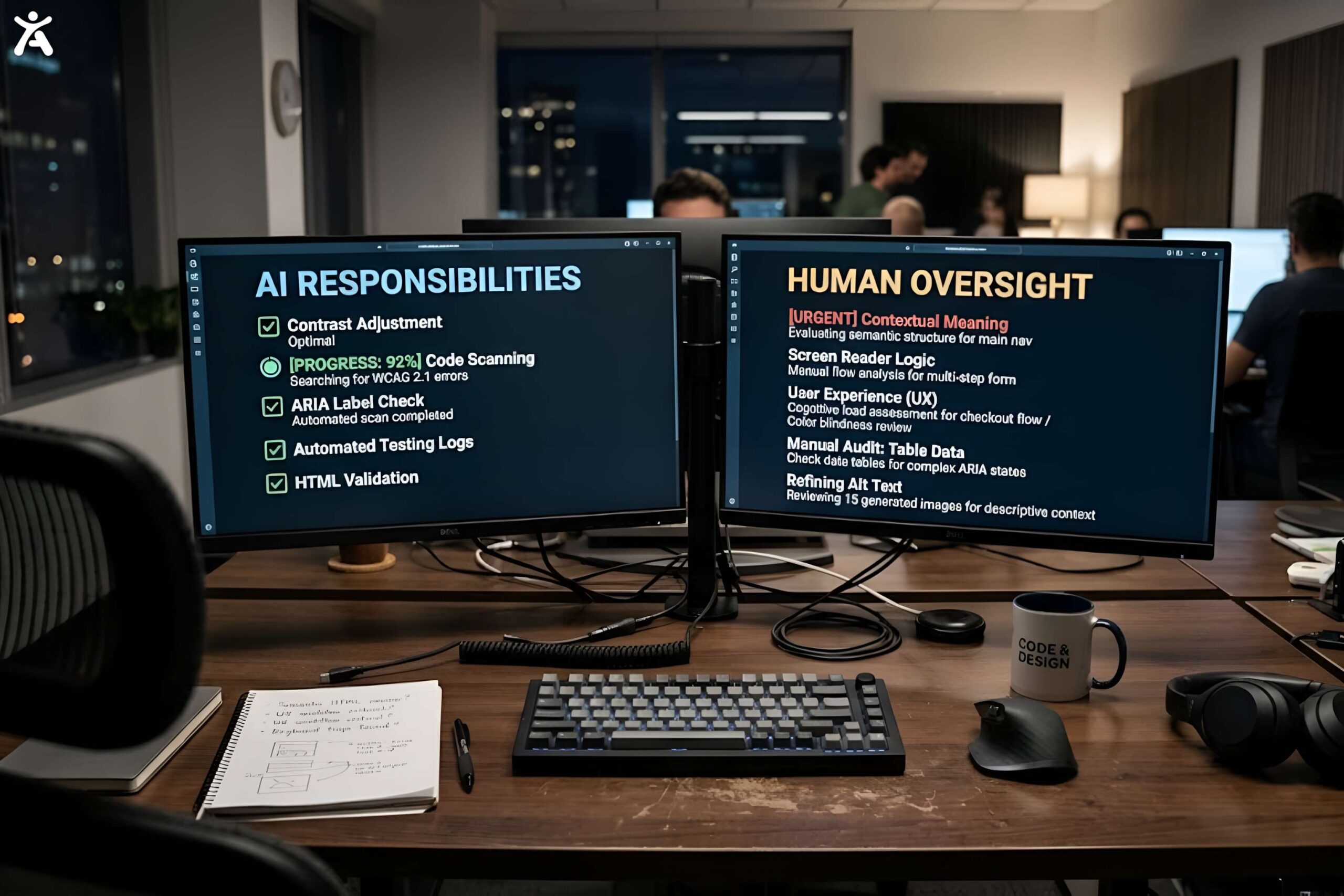
The honest picture is more useful than the hype: AI genuinely helps with specific, well defined tasks, and still falls short on tasks requiring judgment, context, or lived experience of disability. Understanding that split is the difference between choosing a tool that helps and one that creates a false sense of security.

Where AI Genuinely Helps
1. Faster, broader detection AI models trained on accessibility patterns can scan far more of a site, and far faster, than manual review alone. This doesn’t replace manual testing, but it dramatically shrinks the haystack a human reviewer needs to search through.
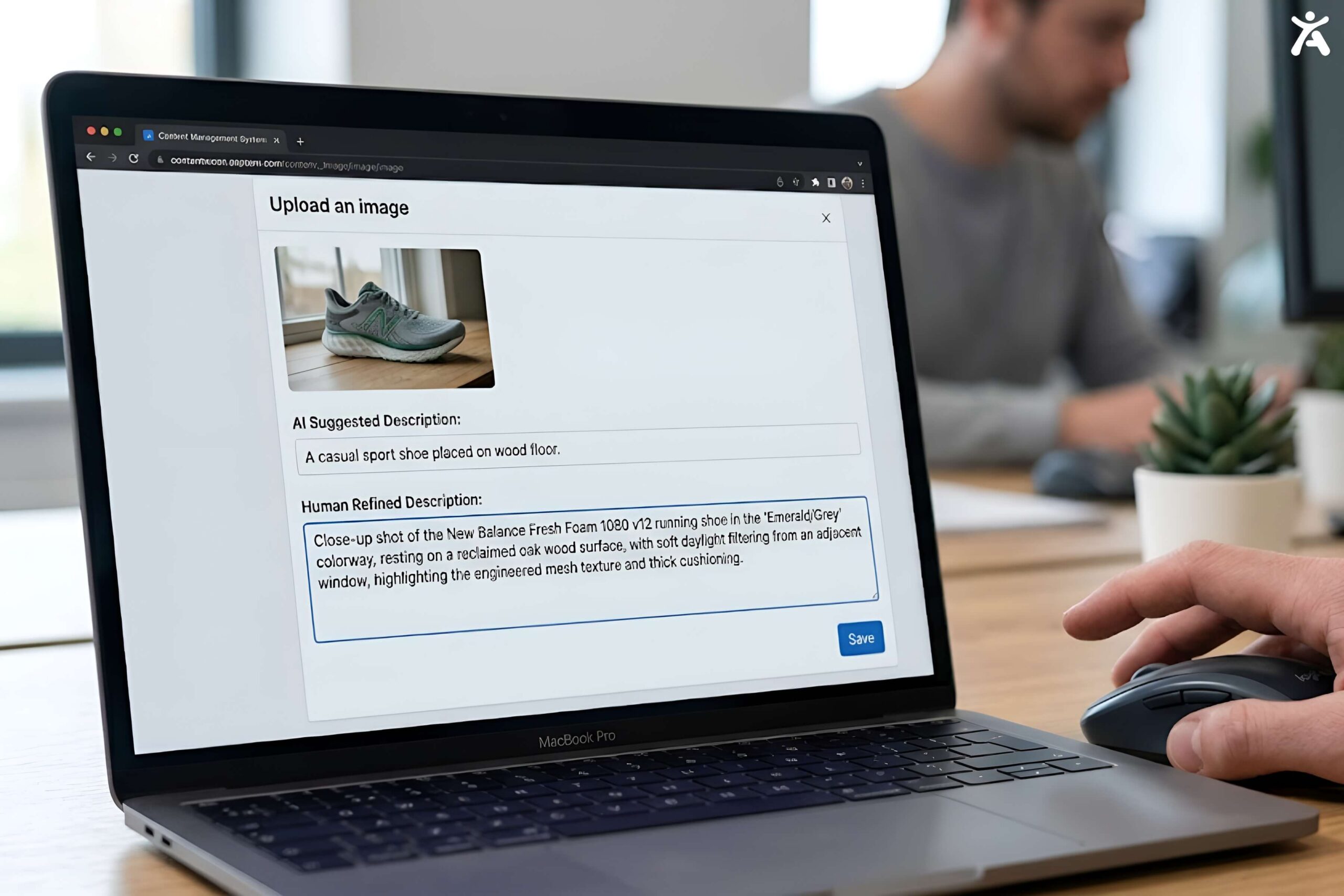
2. Draft alt text at scale For sites with thousands of product images, AI can generate a reasonable first draft of alt text describing what’s visually in an image. This is genuinely useful as a starting point, though generic AI descriptions often miss context a human would catch, like which product detail actually matters to a shopper.
3. Automatic fixes for objective issues Some accessibility problems have a clear, correct fix that doesn’t require judgment, like adjusting a color that fails contrast ratio math, or adding a missing ARIA label pattern that follows a known, correct structure. AI powered tools can apply these fixes automatically and reliably.
4. Prioritization AI can help rank which issues to fix first based on how many users or pages are affected, which is valuable when a scan returns hundreds of flagged items and a team needs to know where to start.
Where AI Still Falls Short
1. Judging whether alt text is actually meaningful AI can describe what’s in an image, but it can’t reliably know why that image matters in context. A product photo might need alt text describing a specific feature relevant to the shopping decision, something only a human familiar with the product truly knows.
2. Complex, multi step interactions A checkout flow, a multi step form, or an interactive dashboard often has accessibility issues that only show up when a real screen reader user tries to complete the full task. AI pattern matching struggles here because these issues are contextual, not just a matter of correct code structure.
3. Cognitive and plain language accessibility Whether content is genuinely easy to understand for someone with a cognitive disability is a judgment call that current AI models are not reliable at making consistently.
4. Legal defensibility on its own No automated tool, AI powered or otherwise, can guarantee legal compliance by itself. Courts and regulators have increasingly scrutinized overlay only claims, which is part of why pairing automated tools with genuine manual testing and, where possible, user testing with people with disabilities remains the responsible standard.
How to Evaluate an AI Accessibility Tool
Before adopting any AI powered accessibility product, it’s worth asking:
- Does it clearly separate what it automatically fixes from what still needs manual review, or does it imply full compliance out of the box?
- Can you see and edit the AI’s suggestions, like alt text drafts, before they go live?
- Does the vendor publish what their AI actually detects and fixes, in specific terms, rather than vague marketing claims?
- Is there an option to combine automated fixes with human oversight rather than relying on automation alone?
Tools that answer these questions transparently, rather than implying a single line of code solves compliance entirely, tend to be the more responsible choice long term.
Where Accessify Fits Into This Picture
Accessify uses AI to speed up detection and to apply fixes for well defined, objective issues, like contrast corrections and draft alt text suggestions, while being transparent that some issues still benefit from human review. Rather than claiming instant full compliance, the goal is to meaningfully close the gap between “compliant on paper” and “usable in practice,” faster than manual only remediation would allow, without overstating what any AI tool can guarantee alone.
Combine AI speed with real compliance. Start your Accessify trial.
FAQ
Can AI make a website fully accessible on its own?
No. AI tools speed up detection and can automatically fix certain objective issues, but full WCAG conformance still requires human judgment and testing with real assistive technology for complex or contextual issues.
Is AI generated alt text good enough to use as is?
It’s a useful starting point but often needs human review, since AI can describe what’s visually in an image without understanding why that detail matters in context.
Are AI accessibility overlays controversial?
Yes, some AI powered overlay products have faced criticism, including from disability advocacy organizations, for implying instant full compliance. The concern isn’t AI itself, but marketing that overstates what any automated tool can guarantee.
What should I look for in a responsible AI accessibility tool?
Look for transparency about what the tool actually detects and fixes automatically versus what still needs manual review, along with the ability to review and edit AI generated suggestions before they go live.