
As a strategist who has navigated thousands of digital audits, I can tell you that we are currently hurtling toward an accessible web design agency. Despite decades of available guidance, the WebAIM Million project recently confirmed a sobering reality: 96.3% of the world’s top one million homepages still fail to meet basic accessibility standards. In my experience, most founders view this as a technical footnote, but by 2026, it becomes a mandatory civil right with teeth.
Quick Summary
The timeline is no longer abstract. The June 2025 European Accessibility Act (EAA) enforcement is the “next GDPR” for any company doing business in the EU. Closer to home, the Department of Justice’s April 2024 final rule for ADA Title II has established a hard deadline: state and local government entities with populations of 50,000 or more must be WCAG 2.1 Level AA compliant by April 24, 2026 (smaller entities have until April 2027).
While these dates specifically target the public sector, don’t be misled the DOJ’s move signals a massive shift for Title III (Commercial) entities. Private businesses are no longer in a legal gray zone; websites are now explicitly “places of public accommodation.” If your agency isn’t preparing you for this shift today, they are handing you a liability, not a lead-generation tool.
Why “Bolt-On” Solutions Fail
An overlay is a digital target site
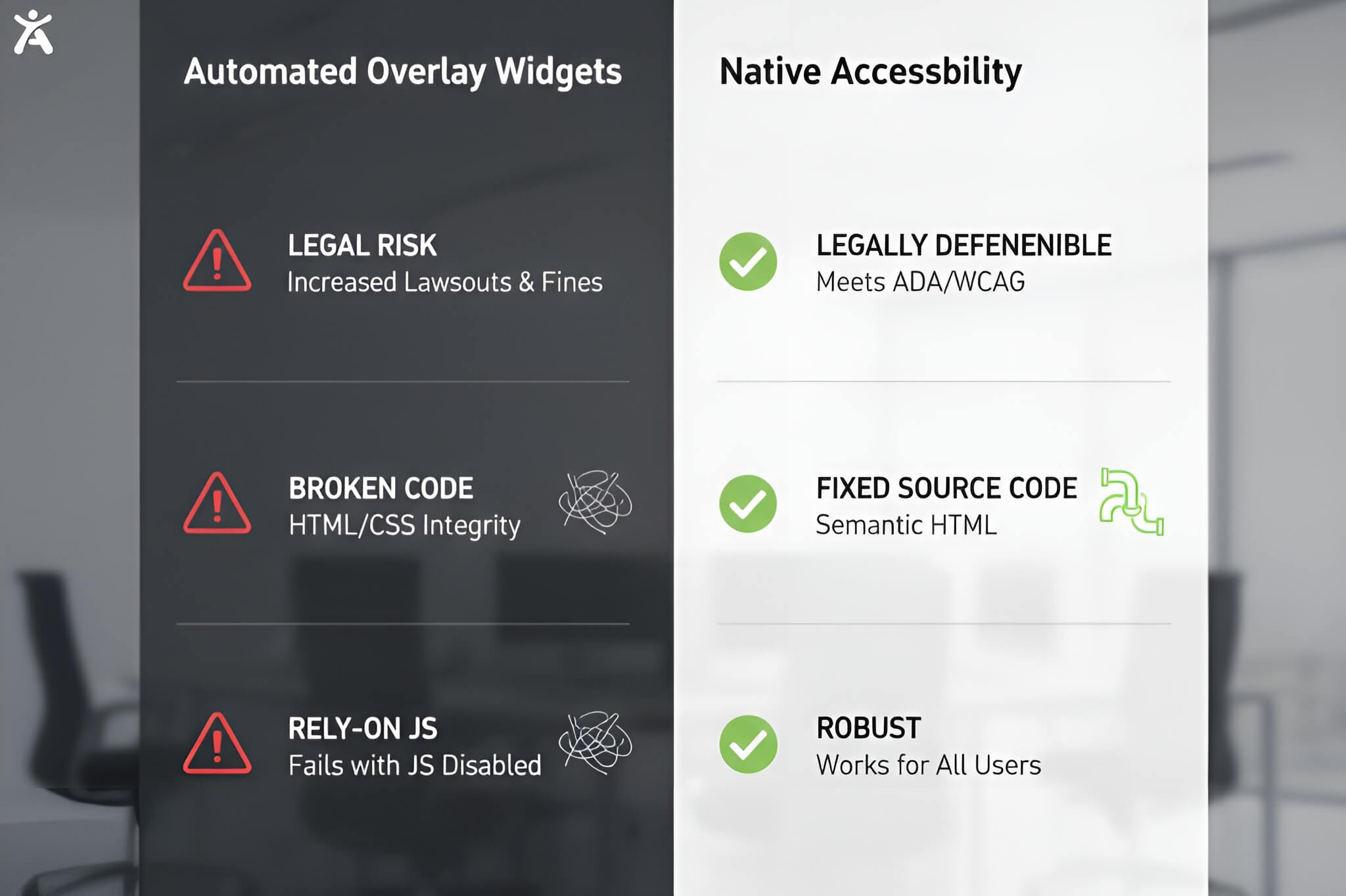
Let’s be blunt: an overlay is a digital ‘kick me’ sign. Trolling lawyers specifically target sites using these widgets because they signal that the underlying source code is broken. In 2023 alone, 30% of all digital accessibility lawsuits involved sites using overlays. Furthermore, the Federal Trade Commission (FTC) recently imposed a $1 million fine against AccessiBe for deceptive compliance claims, and federal courts are increasingly rejecting these widgets as evidence of a good-faith effort.
Technically, overlays fail because they only modify the Document Object Model (DOM) after the page loads. They don’t fix the source. As we say at the strategist level:
“Accessibility isn’t an afterthought; it’s a core design principle.”
True inclusion requires “Native Accessibility.” You need a partner who “bakes” accessibility into the semantic HTML from the very first line of code. If an agency suggests “bolting it on” later, they aren’t an accessibility agency they’re a liability in disguise.
The 30/70 Testing Standard: Identifying Technical Competence
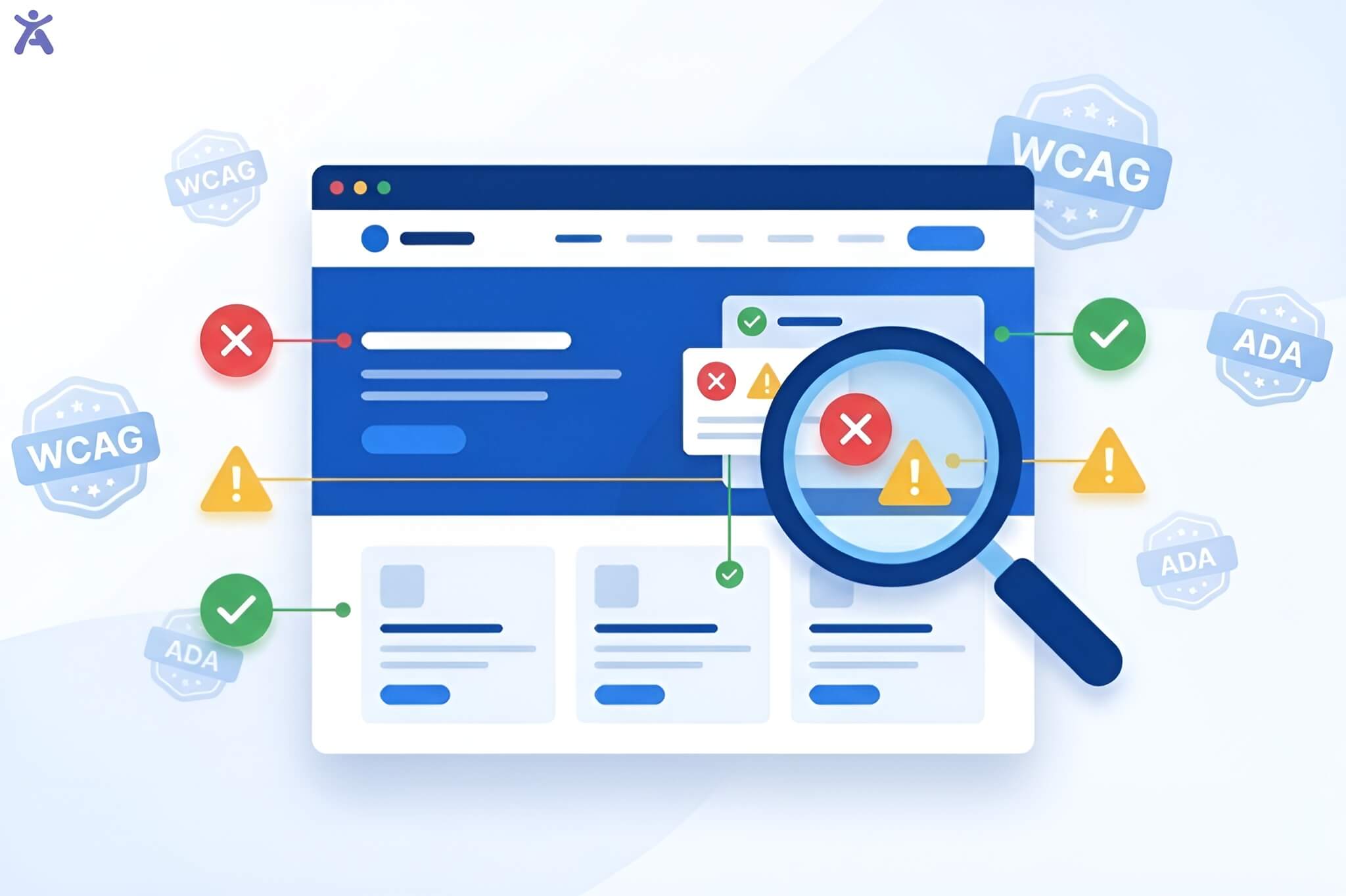
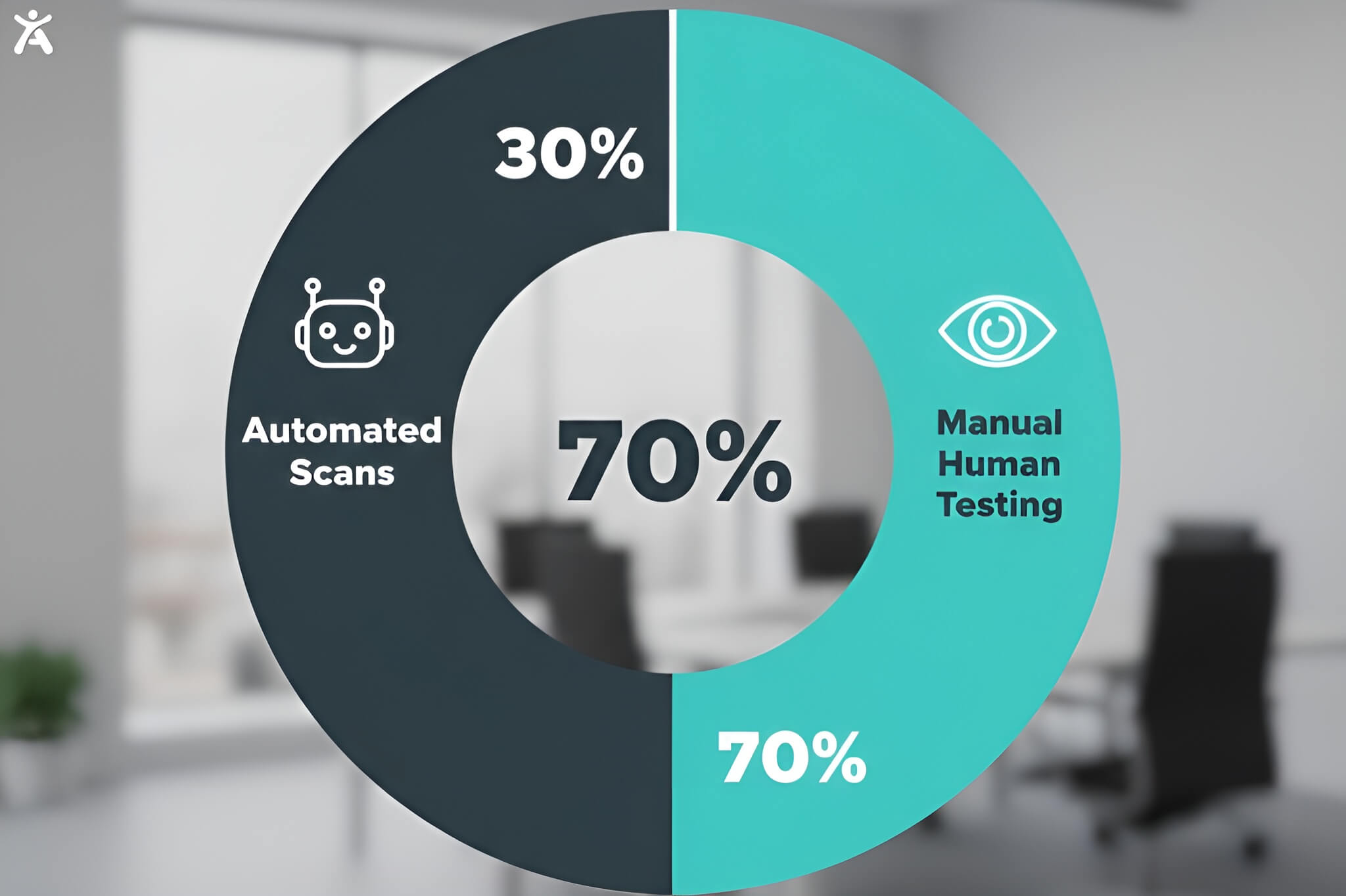
I often tell my clients about the 30/70 Rule: automated tools only catch approximately 30% of accessibility barriers. The remaining 70% the nuanced, interactive failures that actually block a user from finishing a checkout flow require manual human evaluation.
Avoid “operational shock”
AI cannot understand “meaningful context.” An automated scanner might see that an image has “alt-text,” but it can’t tell if that text accurately describes a complex data chart or just says “image123.” To avoid “operational shock” as deadlines approach, an expert agency must employ this three-tier methodology:
1• Automated Crawls: To catch low-hanging fruit across thousands of pages.
2• Manual Code Review: To verify semantic HTML, ARIA roles, and keyboard focus orders.
3• Assistive Technology Testing: Testing the user journey with actual screen readers (JAWS, NVDA) and keyboard-only navigation.
The AIO Insight
In 2026, we are moving beyond SEO to AIO (Artificial Intelligence Optimization). AI models and LLM crawlers are essentially the world’s most sophisticated blind users. If a screen reader can’t navigate your site, neither can an AI crawler. Building for WCAG is no longer just about compliance; it’s about ensuring your brand is readable by the AI engines that will drive 2026 search traffic.
Questions that Filter for Expertise
Only 28% of organizations currently address accessibility at the planning stage a methodology known as “Shift Left.” Integrating accessibility early is the only way to avoid “accessibility debt,” which is significantly more expensive to remediate post-launch.
Criteria to filter for agencies
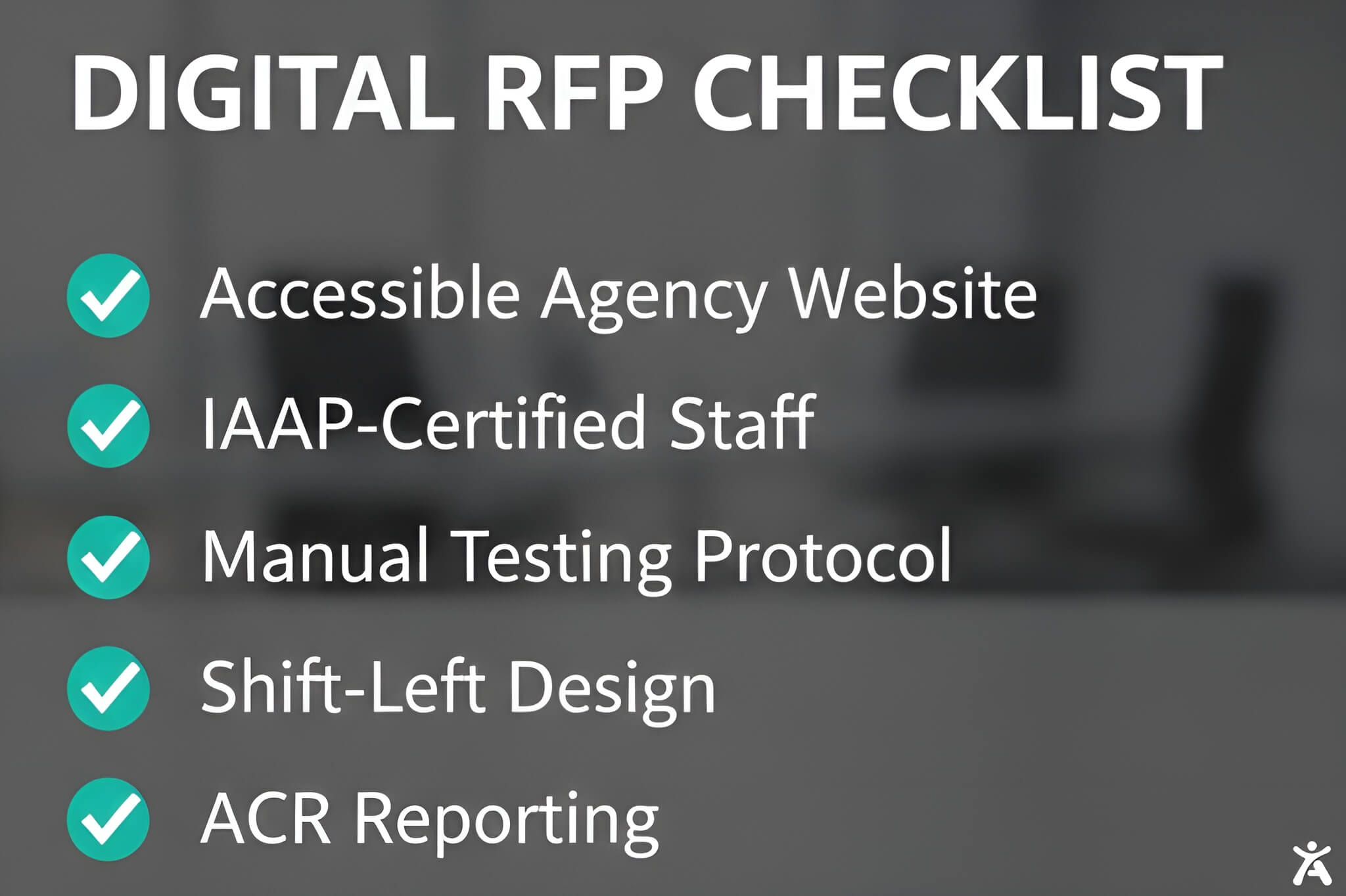
When drafting your RFP, use these criteria to filter for agencies that actually know their way around a 508 or ADA audit:
- Is the agency’s own website fully accessible? (Pro Tip: Run a free WAVE or Axe scan on their portfolio before the first meeting.)
- Do they employ IAAP-certified specialists? (Look for WAS or CPACC credentials.)
- What is their “Shift Left” strategy? (Ask if accessibility is a final QA task or a design-phase requirement.)
- Can they provide sample Accessibility Conformance Reports (ACRs)? (Note: A VPAT is just the template; the ACR is the completed document that proves their work actually meets the standard.)
- How do they handle “Day 2” support? (Accessibility is not a “fix-it-and-forget-it” project. Do they have a plan for maintenance as your CMS evolves?)
- ROI Beyond Compliance: The $18 Trillion Market Opportunity
Massive market expansion strategy
I don’t just champion accessibility because it’s the right thing to do; I champion it because it is a massive market expansion strategy. We categorize the returns into three tiers:
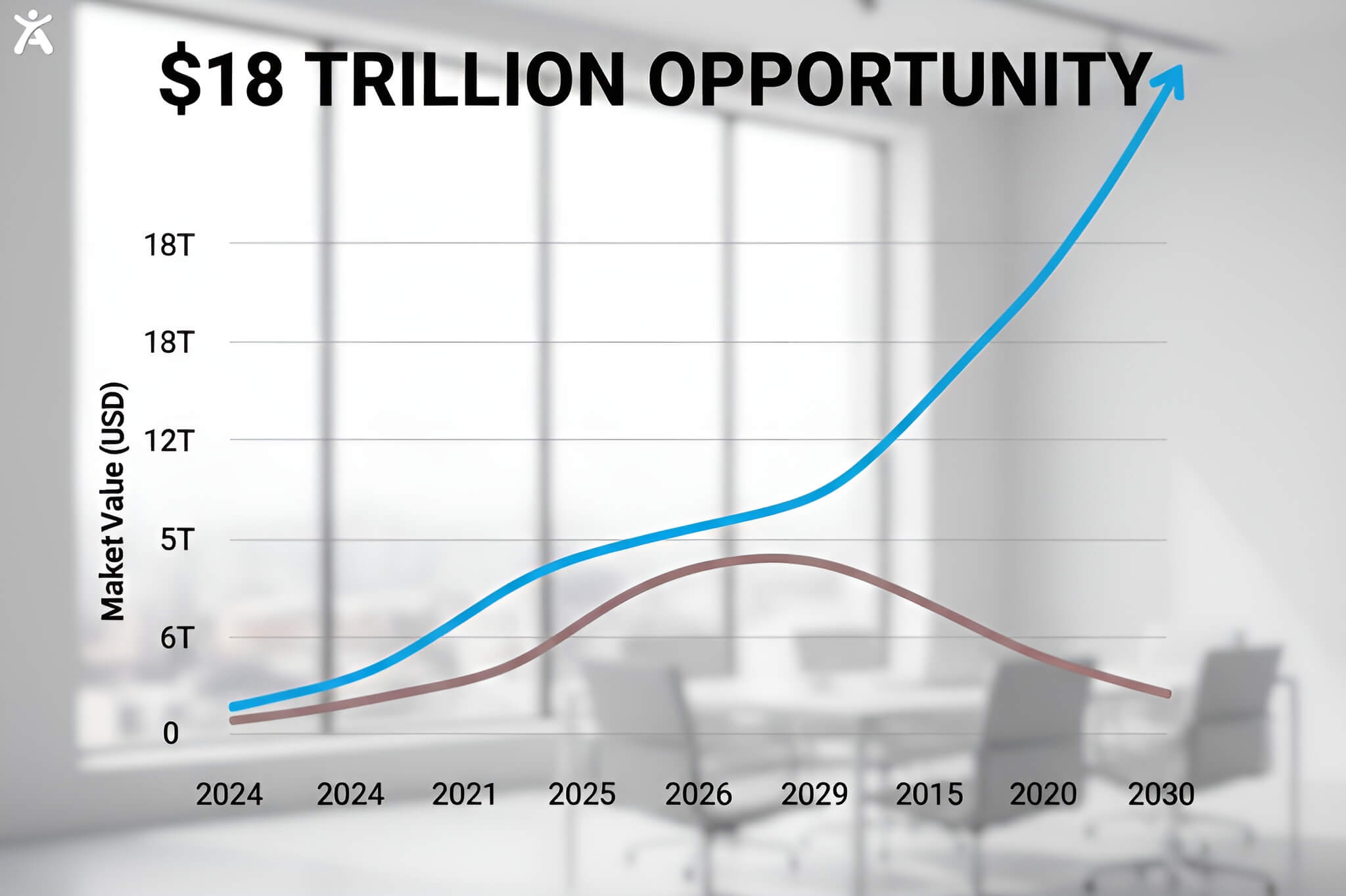
- Market Expansion ($18 Trillion): The global spending power of people with disabilities and their networks is nearly 18trillion In North America and Europe, the disposable income of this group exceeds2.6 trillion. When Tesco prioritized an accessible platform, they saw millions in additional revenue from users who could finally shop independently.
- SEO & AIO Boost: Accessibility best practices like transcripts and heading hierarchies are direct SEO ranking factors. CNET reported a 30% increase in Google search traffic simply by adding transcripts to their videos.
- Legal Risk Mitigation: Settling an ADA Title III lawsuit typically costs between $10,000 and $50,000 once legal fees are factored in. Proactive native accessibility is a fraction of the cost of a reactive legal crisis.
Finally, consider the “Curb-Cut Effect.” Just as physical curb cuts help parents with strollers and travelers with luggage, digital accessibility like high contrast for sunlight or captions for loud environments improves the experience for 100% of your audience.
A Forward-Looking Mandate
Selecting your design agency is the highest-leverage decision you will make in 2026. You are choosing between building technical debt or digital equity. A partner who understands that accessibility is a driver of innovation, rather than a legal hurdle, will deliver a platform that reaches the widest possible audience and withstands the coming regulatory shifts.
Is your digital presence currently a bridge to your entire audience, or a barrier that’s costing you the next $2.6 trillion in disposable income?
FAQs
A native fix involves correcting the website’s actual source code to meet WCAG standards. An accessibility widget (or overlay) is a third-party script that sits on top of the code. Overlays do not fix the underlying issues, are often rejected by courts, and can be used by lawyers to identify non-compliant sites.
Yes. While the April 2026 deadline specifically targets ADA Title II (government), the DOJ and federal courts have clarified that Title III (commercial) websites are “places of public accommodation” and must provide equal access. Furthermore, the EAA mandates compliance for many private-sector companies by June 2025.
Search engines reward sites with clear structure, mobile optimization, and descriptive content all of which are pillars of accessibility. Features like alt-text and video transcripts help search bots index your content more effectively, often leading to significant traffic increases.
Verify that their projects utilize “native” remediation rather than widgets. Look for case studies that mention manual testing and ask to see an Accessibility Conformance Report (ACR). A strong agency will also have an accessible website of their own.
Depending on the size and complexity of the site, a professional audit typically ranges from $3,000 to $30,000. This investment covers the specialized manual testing and assistive technology reviews that automated tools miss.