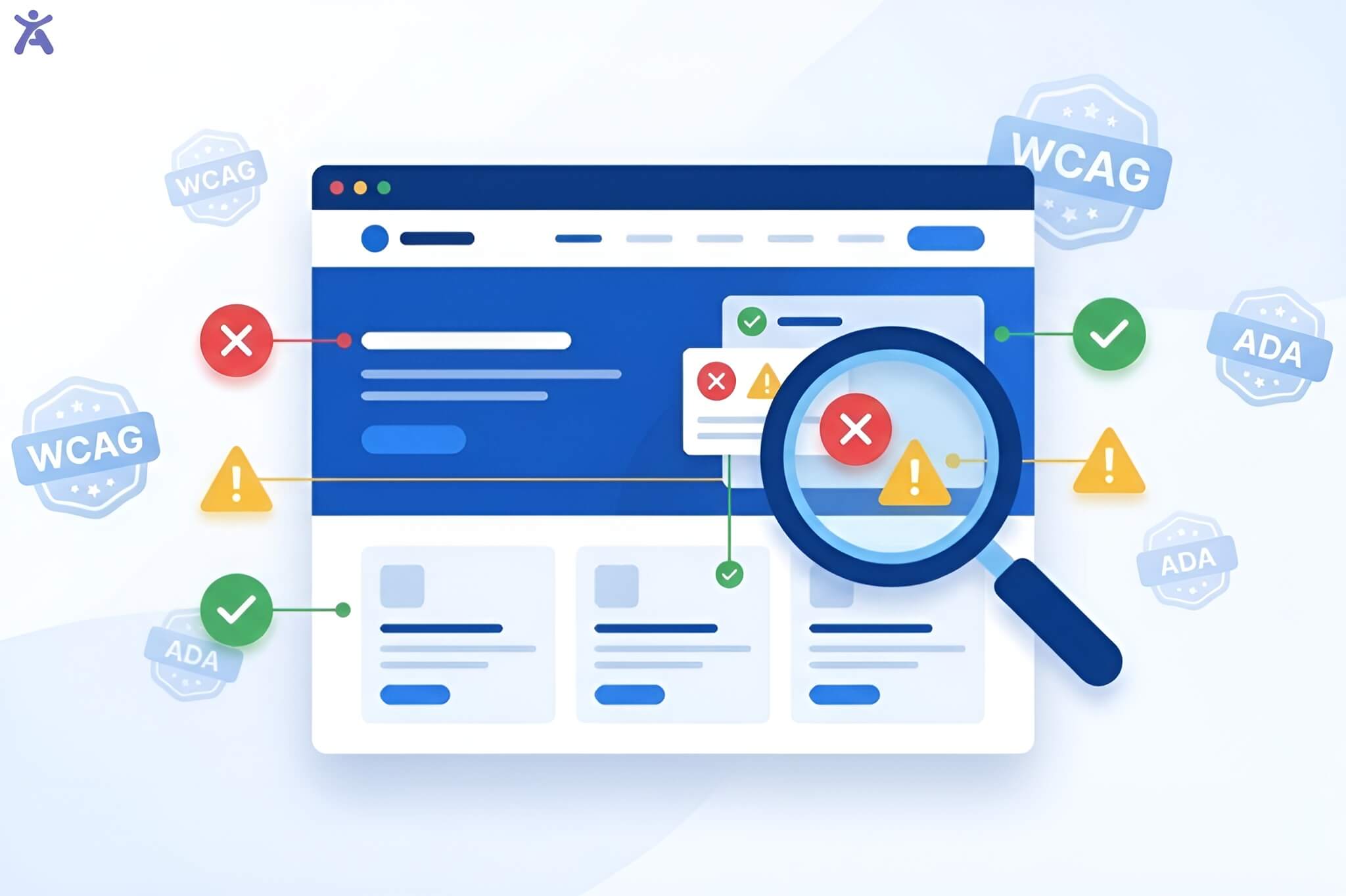
Web accessibility certifications are essential for digital professionals amid changing legal requirements and inclusivity. The year 2026 represents a decisive “Regulatory Rush” in the digital landscape. On April 24, 2026, the Americans with Disabilities Act (ADA) Title II deadline officially mandates that state and local governments serving populations over 50,000 must ensure their digital presence conforms to WCAG 2.1 Level AA.
This requirement extends to smaller jurisdictions and special districts by April 26, 2027. Consequently, digital accessibility has transitioned from a discretionary “nice-to-have” to a non-negotiable strategic necessity for global commerce and public service.
Quick Summary
This professionalization represents a fundamental shift from theoretical compliance to validated, high-level expertise. In a market where exclusionary design is increasingly viewed as a legal and reputational liability, possessing a verified credential is no longer a mere career enhancement it is a survival requirement for serious practitioners and a mandatory risk-mitigation strategy for the 2026 fiscal year.
The Global Gold Standards for web accessibility certifications
The IAAP Certification Ecosystem
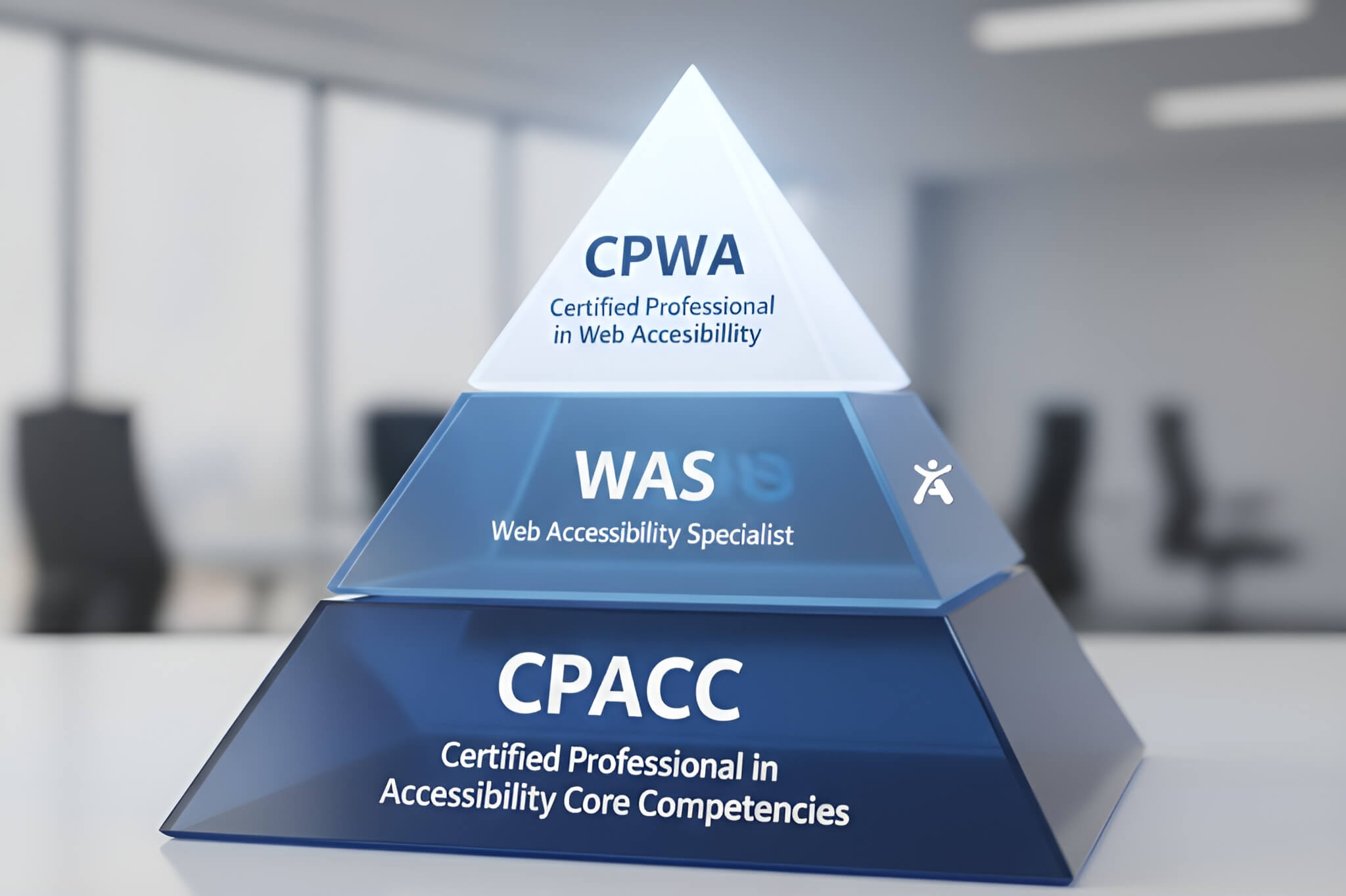
The International Association of Accessibility Professionals (IAAP) remains the definitive certifying body for the global industry. Their ecosystem provides the “shared language” required for cross-functional teams to achieve repeatable success.
|
Certification Title
|
Ideal Candidate/Role
|
Core Focus
|
|
CPACC
|
Project Managers, UX Researchers, HR, Legal
|
Foundational knowledge, Universal Design (POUR), and global management.
|
|
WAS
|
Developers, QA Engineers, Technical Consultants
|
Advanced ARIA, code-level remediation, and mobile app testing.
|
|
CPWA
|
Senior Architects, CAOs, Lead Consultants
|
The “Master Credential” merging theoretical policy with technical mastery.
|
CPACC (Foundational Knowledge)
The Certified Professional in Accessibility Core Competencies (CPACC) is the industry’s foundational benchmark. It is meticulously designed for those who oversee programs or strategy rather than writing remediation code. The curriculum is built upon three critical pillars:
Understanding Disabilities: Analyzing impairments (visual, auditory, motor, cognitive) and the specific digital barriers they encounter.
Universal Design Principles: Mastering the POUR framework (Perceivable, Operable, Understandable, Robust) as the bedrock of inclusive architecture.
Legal and Management Strategies: Navigating a complex web of global legislation, including Section 508, the EAA, and the AODA.
WAS (Technical Deep-Dive)
The Web Accessibility Specialist (WAS) is an elite technical credential that requires a minimum of three years of hands-on experience in the field. This exam bypasses theory to focus on execution, including:
Advanced ARIA: Implementing roles, states, and properties within complex web components.
JavaScript Remediation: Ensuring dynamic, single-page applications are fully keyboard-navigable.
CPWA (The Master Credential)
The Certified Professional in Web Accessibility (CPWA) is awarded only to those who hold both the CPACC and WAS designations. It represents the pinnacle of professional validation.
“The CPWA is the hallmark of an elite professional who understands both the ‘why’ the social and legal frameworks and the ‘how’ the deep, technical implementation of accessibility.” IAAP Industry Standard
The Federal Powerhouse: DHS Trusted Tester (v5)
For practitioners focused on the U.S. federal sector, the Department of Homeland Security (DHS) Trusted Tester program is the indispensable gold standard. It enforces a manual, structured approach to Section 508 conformance that ensures “repeatable and reliable” results across government agencies.
Pros:
Zero Cost: Training and exams are provided free of charge to the public.
No Maintenance: Unlike IAAP credentials, there are no annual renewal fees or continuing education requirements.
High Marketability: Federal agencies and contractors almost exclusively recognize Trusted Tester results for official conformance reporting.
Cons:
Extreme Difficulty: The certification requires a 40–80-hour time investment and a high passing score of 85–90%.
Strict Manual Focus: It requires deep familiarity with specific manual tools like ANDI and the Colour Contrast Analyser.
AI Governance and web accessibility certifications

As Artificial Intelligence integrates into every facet of the web, the Artificial Intelligence Governance Professional (AIGP) by the IAPP has become a critical strategic asset. Current industry data reveals a massive skills gap: 93% of organizations lack confidence in securing AI-driven data, and 80% feel unprepared for new AI regulations.
The financial incentive for this specialization is unprecedented:
26% Wage Premium: Average increase for roles requiring AI governance certifications.
56% Wage Premium: Reported for jobs specifically requiring general AI skills compared to non-AI roles.
Niche Tools (NVDA & JAWS)
To reach the highest levels of quality assurance, “add-on” certifications in specific assistive technologies are essential:
NVDA Expert: Validates proficiency in the world’s leading open-source screen reader.
JAWS Certification: Validates mastery of the industry-standard paid screen reader for blind users.
Human Expertise vs. Automated Overlays
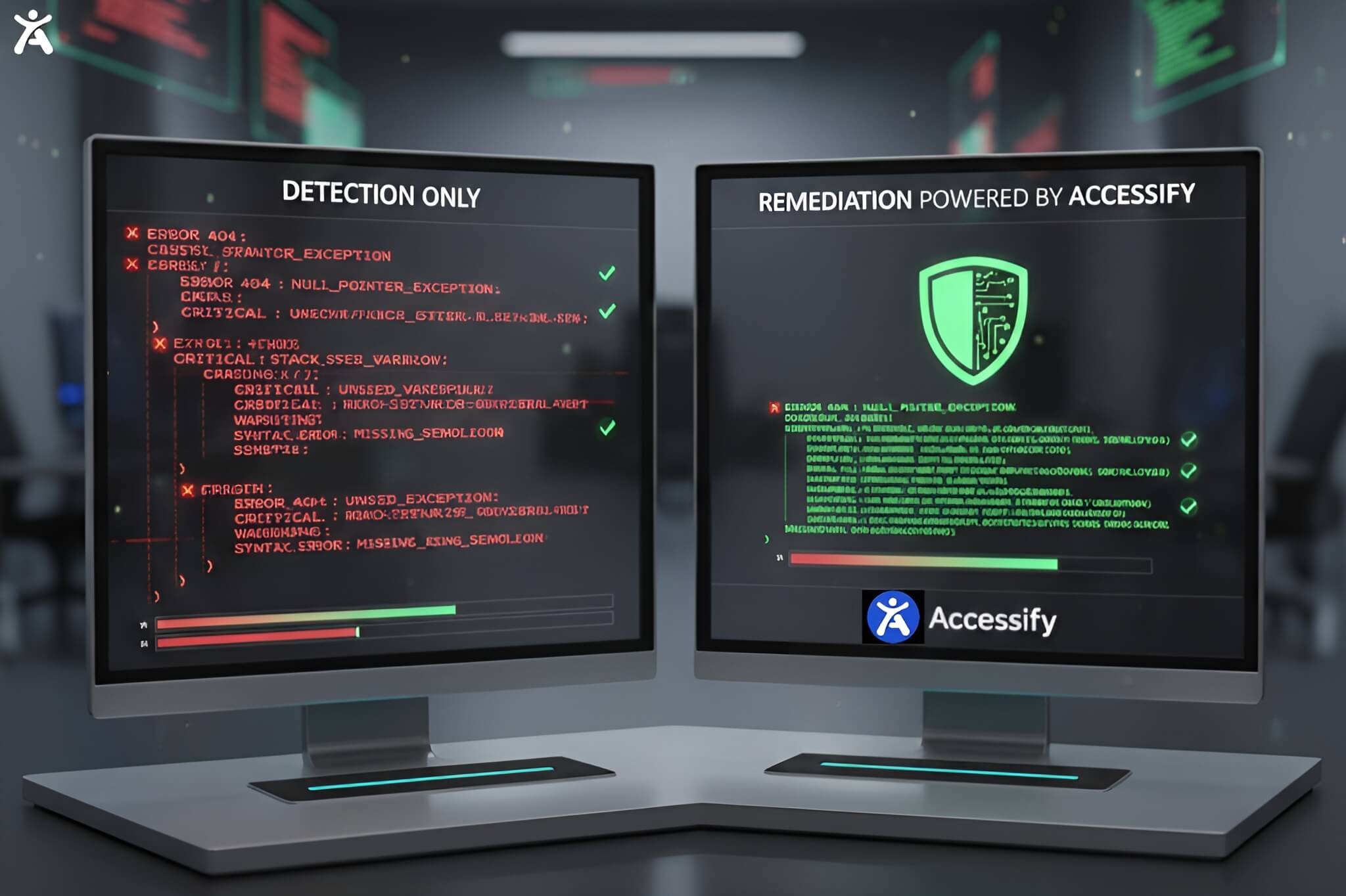
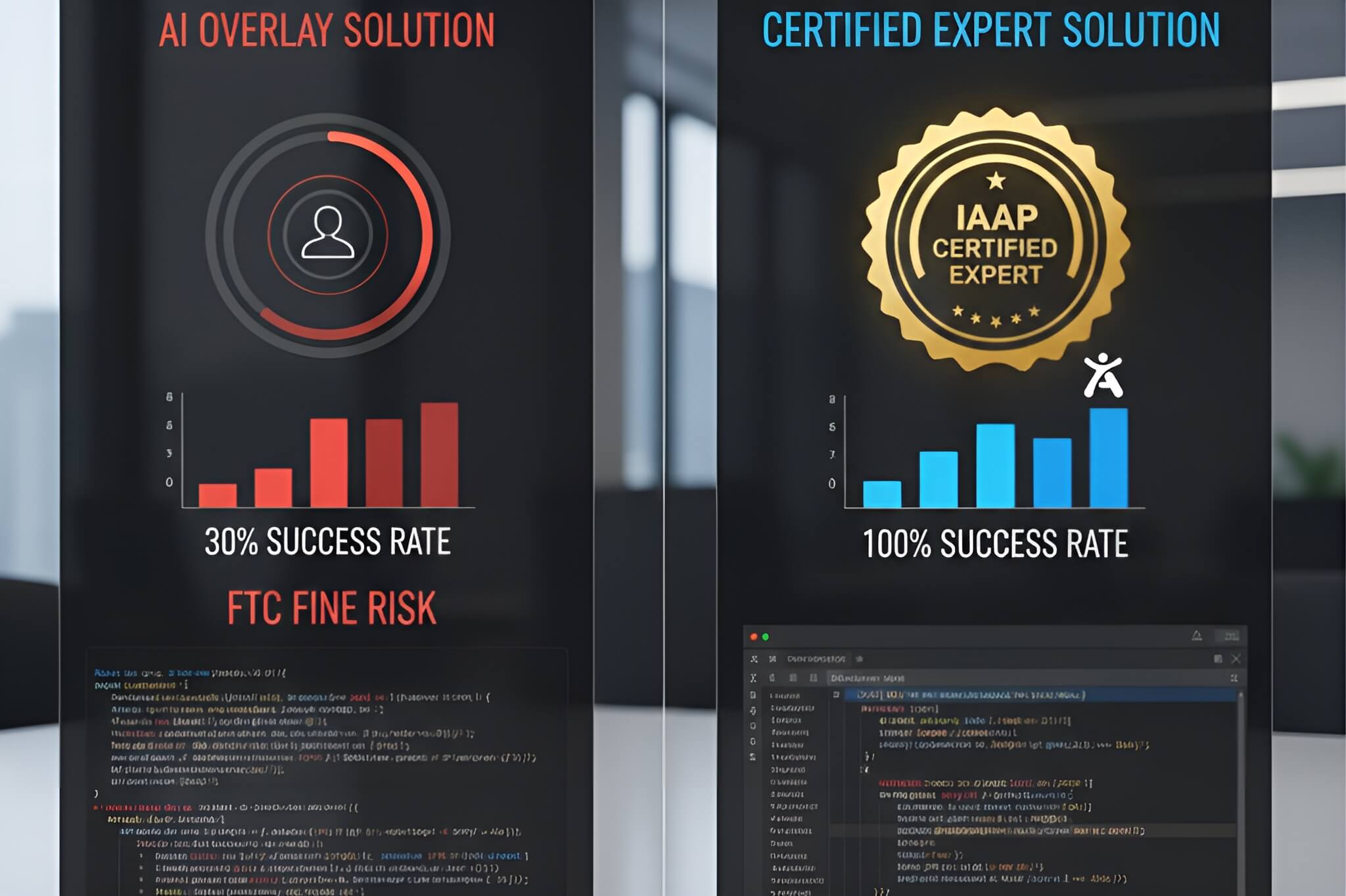
The market in 2026 has become sharply divided between “Automated Overlays” (e.g., accessify, UserWay) and the “Professional Source Code” approach. The risks of automation were highlighted by the $1 million FTC fine against accessiBe for false advertising regarding product capabilities.
Certified human experts are required to bridge the “context gap” identifying whether a complex multi-step course registration system is actually usable, rather than just checking if images have alt-text.
|
Feature
|
Automated Overlays
|
Certified Human Experts
|
|
Detection Rate
|
30–40% of WCAG issues
|
Up to 100% of discernible issues
|
|
Legal Risk
|
High; frequently targeted in litigation
|
Low; demonstrates “good faith” efforts
|
|
Sustainability
|
Temporary JS “patch”
|
Permanent, robust fixes in source code
|
|
User Experience
|
Can block screen reader users
|
Optimized for real-world assistive tech
|
Salary Benchmarks and Career Trajectory
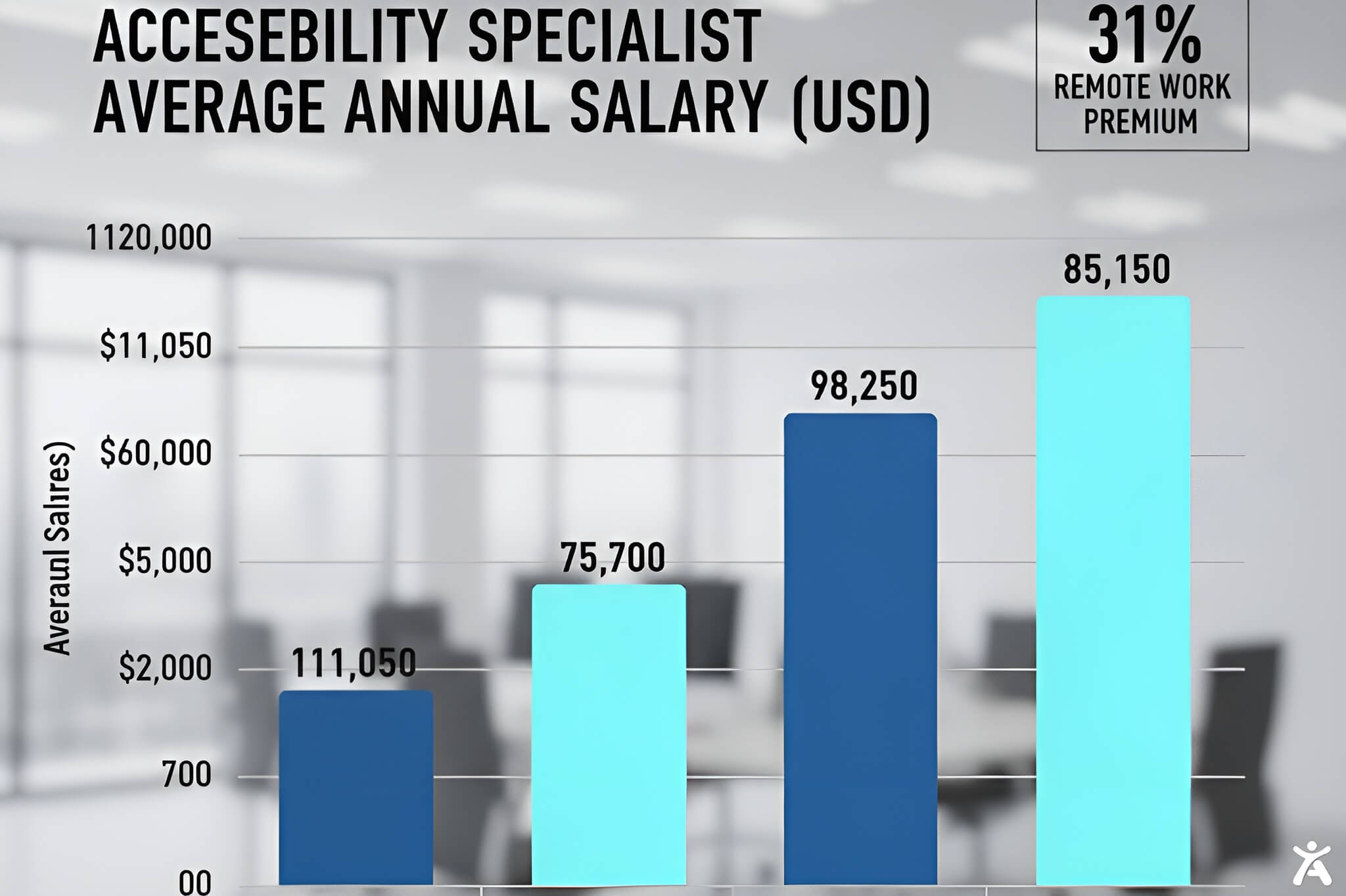
Average Full-Time Salary (USD Equivalent)
United States: $121,083
Australia: $96,097
Canada: $86,597
United Kingdom: $82,917
European Union: $82,181
The Strategist’s Edge
Practitioners should leverage these certifications as primary negotiation levers for remote-first positions. Full-time remote workers earn an average of 109,852$.
Conclusion
As we move toward the 2030 horizon, the industry is shifting toward WCAG 3.0 (Silver). This framework moves away from binary “Pass/Fail” results toward a graded scoring system (0–4) and introduces the APCA (Advanced Perceptual Contrast Algorithm). Unlike the old 4.5:1 ratio, APCA uses modern vision science to determine contrast based on font size and weight, signifying a more nuanced approach to inclusive design.
In a world where AI can generate code in seconds, will your role be to fix the machine’s errors, or to design the ethical frameworks that prevent them from ever existing?
FAQs
1. Which web accessibility certification is best for developers in 2026?
The IAAP Web Accessibility Specialist (WAS) is the most respected technical certification for developers. It requires three years of hands-on experience and validates deep code-level knowledge of ARIA, JavaScript, and WCAG remediation.
2. Is the DHS Trusted Tester certification worth the effort?
Yes, especially for those working with U.S. federal agencies or contractors. It is free to take but highly rigorous, requiring 40-80 hours of study.
3. What is the difference between CPACC and WAS?
The CPACC is a foundational, non-technical certification focused on disability types, laws, and organizational strategies. WAS is a technical certification focused on identifying and fixing accessibility issues directly in website code.
4. How do accessibility certifications impact my salary?
Certified professionals often see significant pay increases, with salary premiums reaching $10,000 to $20,000 for technical roles. Those combining accessibility with AI governance (AIGP) are seeing wage premiums up to 56% in certain sectors.
5. How long does it take to get certified in web accessibility?
Most professionals spend 6 to 12 weeks preparing for IAAP exams, dedicating roughly 5 to 10 hours per week. The DHS Trusted Tester program typically requires 40 to 80 hours of intensive coursework.