1. Why the accessiBe Controversy Matters for Your Business
accessiBe launched with a bold promise: make any website ADA compliant in 48 hours using AI automation. For thousands of small business owners unfamiliar with WCAG standards, that pitch was irresistible. In 2021, the National Federation of the Blind (NFB) one of the largest and most respected disability advocacy organisations in the United States issued a formal statement expressing serious concerns about automated overlay tools, naming accessiBe as a primary example. The NFB noted that these tools frequently introduced new barriers for screen reader users rather than removing them.
The situation escalated further when multiple law firms began filing ADA complaints against websites using accessiBe arguing that the overlay’s interference with assistive technologies made the site less accessible, not more.
For businesses that had paid for a compliance solution, this was a jarring wake-up call. An accessibility widget is only valuable if it actually works for disabled users not just on a compliance checklist.
The key lesson: Automated overlays that promise instant compliance without touching the underlying code may satisfy surface-level audits but can actively harm the experience of users who rely on assistive technologies.
In 2021, the National Federation of the Blind (NFB) one of the largest and most respected disability advocacy organisations in the United States issued a formal statement expressing serious concerns about automated overlay tools, naming accessiBe as a primary example. The NFB noted that these tools frequently introduced new barriers for screen reader users rather than removing them.
The situation escalated further when multiple law firms began filing ADA complaints against websites using accessiBe arguing that the overlay’s interference with assistive technologies made the site less accessible, not more.
For businesses that had paid for a compliance solution, this was a jarring wake-up call. An accessibility widget is only valuable if it actually works for disabled users not just on a compliance checklist.
The key lesson: Automated overlays that promise instant compliance without touching the underlying code may satisfy surface-level audits but can actively harm the experience of users who rely on assistive technologies.
2. DOJ Overlay Guidance: What It Actually Says
In March 2022, the U.S. Department of Justice issued updated guidance clarifying that Title III of the ADA applies to websites of businesses open to the public. While the DOJ did not issue a formal technical standard, it pointed to WCAG 2.1 AA as the benchmark most courts rely upon. Critically, the DOJ guidance does not endorse any specific overlay or widget solution. Legal experts widely interpret this as a signal that widgets alone are insufficient if the underlying HTML, ARIA structure, and keyboard navigation remain inaccessible.
The practical implication: if your site has deep structural accessibility issues, a surface-level JavaScript overlay regardless of brand cannot fully shield you from ADA litigation.
This is where the philosophy behind Accessify diverges meaningfully from the accessiBe approach.
Accessify combines an intelligent widget layer with ongoing compliance monitoring, flagging structural issues for developers to address rather than claiming to solve everything with a single script injection.
Critically, the DOJ guidance does not endorse any specific overlay or widget solution. Legal experts widely interpret this as a signal that widgets alone are insufficient if the underlying HTML, ARIA structure, and keyboard navigation remain inaccessible.
The practical implication: if your site has deep structural accessibility issues, a surface-level JavaScript overlay regardless of brand cannot fully shield you from ADA litigation.
This is where the philosophy behind Accessify diverges meaningfully from the accessiBe approach.
Accessify combines an intelligent widget layer with ongoing compliance monitoring, flagging structural issues for developers to address rather than claiming to solve everything with a single script injection.
3. NFB Opposition: What the Disability Community Has Said
The National Federation of the Blind, alongside the American Council of the Blind and dozens of disability rights organisations, co-signed an “Overlay Fact Sheet” (available at overlayfactsheet.com) signed by over 700 accessibility professionals.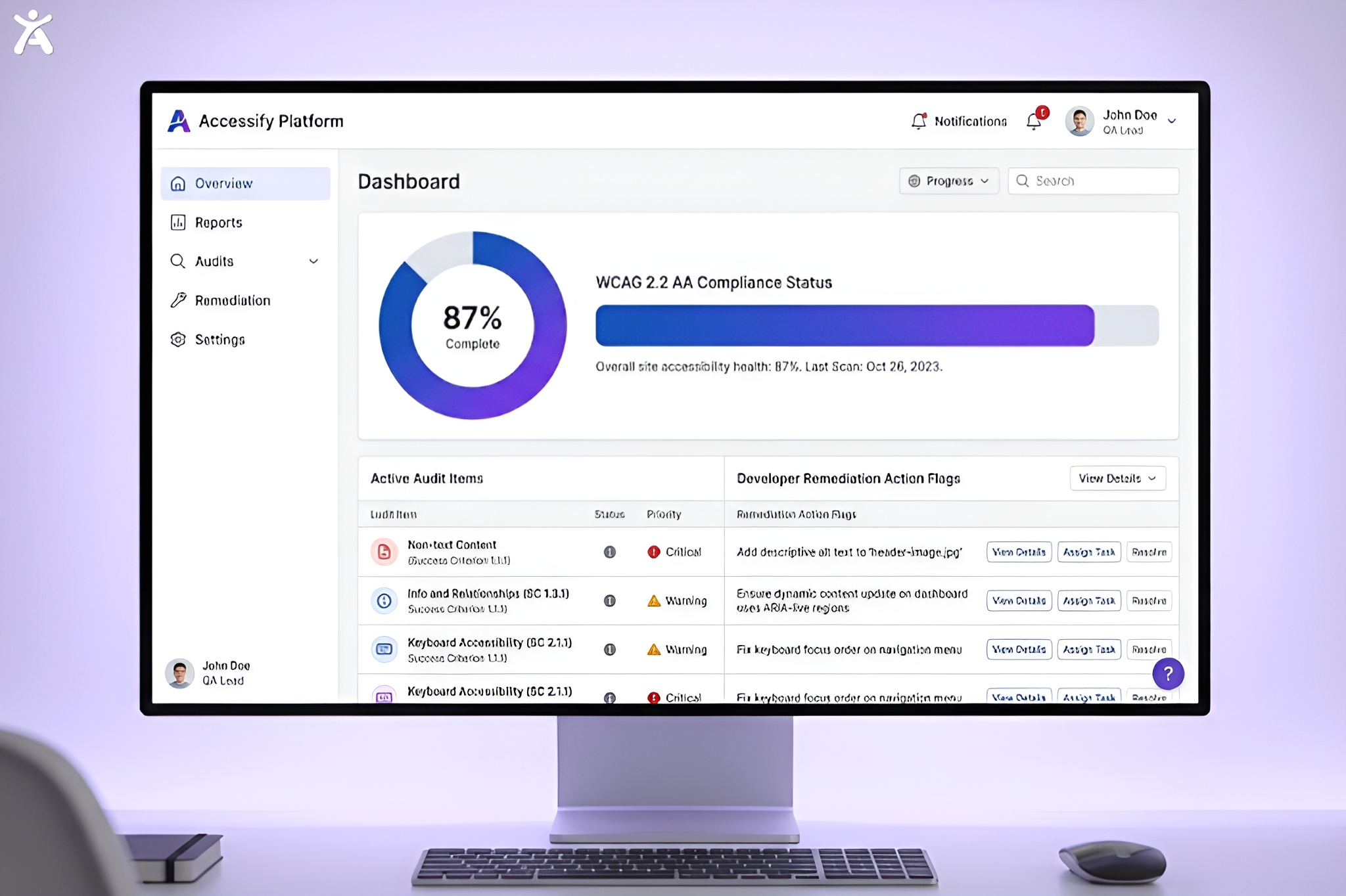 Their core argument: automated overlays cannot reliably fix the following issues
- Missing alt text on images that require human-written descriptions
- Complex form labelling that requires structural HTML changes
- Custom interactive components (carousels, modals, dynamic dropdowns) built without ARIA
- PDF and document accessibility overlays cannot touch embedded files
- Video caption quality auto-captions often fail WCAG 1.2 criteria
4. accessiBe vs Accessify: Feature-by-Feature Comparison
| Feature | Accessify | accessiBe |
|---|---|---|
| WCAG 2.2 AA Coverage | ✅ Full widget layer + audit reporting | ⚠️ Partial AI automation has known gaps |
| Screen Reader Compatibility | ✅ Tested with NVDA, JAWS, VoiceOver | ⚠️ Community-reported conflicts with JAWS |
| Keyboard Navigation Fix | ✅ Automatic focus management | ✅ Yes |
| Colour Contrast Adjustment | ✅ Multiple contrast profiles | ✅ Yes |
| Ongoing Compliance Monitoring | ✅ Dashboard + alerts | ⚠️ Limited reporting |
| Developer Audit Reports | ✅ Actionable issue flagging | ❌ Not included in standard plan |
| DOJ/Litigation Risk | ✅ Lower transparent about limitations | ⚠️ Higher bold compliance claims invite scrutiny |
| Shopify Integration | ✅ One-click install | ✅ Yes |
| WordPress Plugin | ✅ Available | ✅ Available |
| Pricing Transparency | ✅ Clear, per-site pricing | ⚠️ Multi-tier, contract-based options |
| Community Standing | ✅ No NFB opposition | ⚠️ Formally criticised by NFB |
| EAA (European Accessibility Act) Ready | ✅ EN 301 549 / WCAG 2.1 compliant | ⚠️ Limited EAA documentation |
| Free Trial | ✅ Available | ✅ Available |
5. Pricing Breakdown
accessiBe Pricing (2026)- accessiBe operates on a tiered subscription model. Standard plans for small websites begin around $49/month, with enterprise pricing available via contract.
- Annual discounts are available but pricing is not always transparent on first visit.
- Accessify offers clear per-site monthly and annual plans starting at significantly lower price points than enterprise-tier competitors.
- A free trial is available, allowing site owners to test compliance impact before committing.
6. Compliance Depth: WCAG 2.2 AA Performance
WCAG 2.2 introduced 9 new success criteria in October 2023. The most notable additions relevant to widget performance:- 2.5.7 Dragging Movements alternatives must be provided for drag interactions
- 2.5.8 Target Size (Minimum)interactive elements must be at least 24×24 CSS pixels
- 3.2.6 Consistent Help help mechanisms must appear consistently
- 3.3.7 Redundant Entry users shouldn’t have to re-enter the same information
7. Litigation Risk: Which Tool Protects You Better?
ADA web accessibility lawsuits reached record numbers in 2023 and continued rising through 2025. According to data tracked by UsableNet, over 4,600 ADA web accessibility cases were filed in federal court in 2023 alone. The legal community has developed a clear view: an accessibility overlay does not automatically confer immunity from ADA lawsuits. Multiple courts have allowed cases to proceed against websites using overlay tools including at least three documented cases involving sites that used accessiBe. This does not mean accessiBe users are uniquely at risk. It means the legal shield provided by any overlay is conditional on that overlay actually delivering functional accessibility for disabled users.
Accessify reduces litigation risk through two mechanisms:
This does not mean accessiBe users are uniquely at risk. It means the legal shield provided by any overlay is conditional on that overlay actually delivering functional accessibility for disabled users.
Accessify reduces litigation risk through two mechanisms:
- Honest compliance positioning no claim of “instant full compliance,” which reduces the evidentiary risk of a plaintiff arguing your compliance claim was itself misleading
- Audit trail documentation Accessify’s compliance dashboard creates a record of your accessibility efforts, which courts increasingly view favourably as evidence of good-faith compliance attempts
8. Real User Reviews
User sentiment across G2, Capterra, and Trustpilot reveals a pattern: accessiBe users frequently cite:- Initial ease of installation (positive)
- Concerns about screen reader conflicts discovered after deployment (negative)
- Frustration when legal issues arose despite paying for a “compliance” solution (negative)
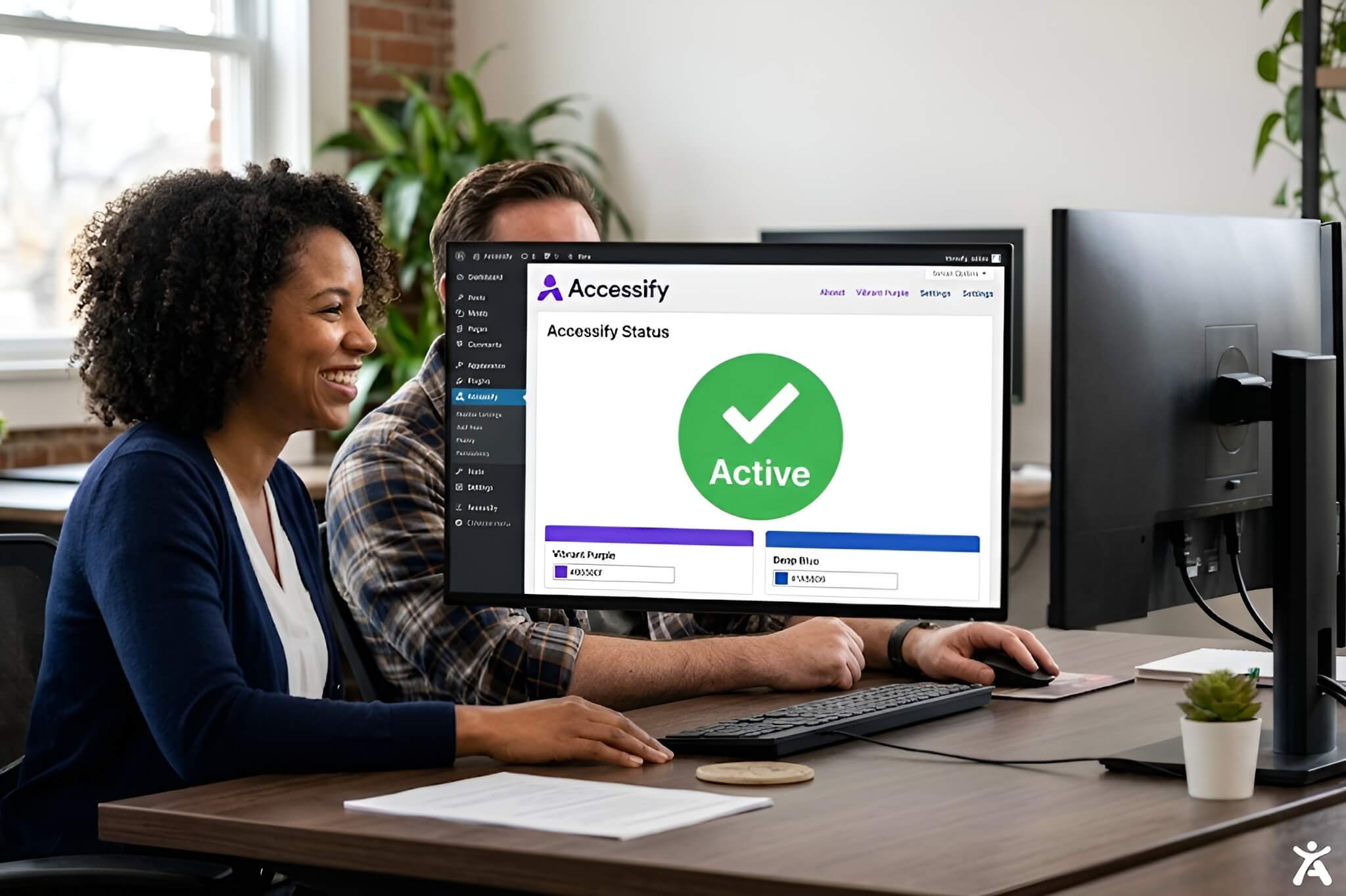
- Simple setup with clear install documentation
- Appreciation for the audit dashboard that identifies issues beyond the widget’s scope
- Positive interactions with customer support on compliance questions
9. Which Tool Is Right for You?
Choose Accessify if:- You need honest, defensible WCAG 2.2 AA compliance
- Your site is on Shopify, WordPress, or a major CMS
- You want lower litigation risk without aggressive compliance overclaims
- You operate in the EU and need EAA readiness
- Budget efficiency matters
- You need a fully managed, enterprise-level remediation programme with dedicated human auditors (in which case, you need a professional accessibility audit firm, not any widget)
Conclusion
The accessiBe controversy is not just an industry footnote it is a compliance warning that every website owner should take seriously. When a tool promising ADA protection attracts formal opposition from the disability community and features in ADA lawsuit proceedings, the risk calculus changes. Accessify offers a responsible, transparent, and more affordable path to WCAG 2.2 AA compliance. It does not overclaim. It does not create new barriers. And it gives you the audit documentation you need to demonstrate good-faith compliance efforts. Ready to make the switch? Start your free Accessify trial today →FAQ
Is accessiBe fully ADA compliant?accessiBe provides an automated overlay that addresses many WCAG criteria, but independent auditors and disability advocacy groups including the NFB have documented cases where it fails to deliver full WCAG 2.1 or 2.2 AA compliance particularly for screen reader users. No overlay tool can guarantee full ADA compliance without addressing the underlying code.
No. The DOJ’s updated ADA guidance points to WCAG 2.1 AA as the compliance benchmark but does not endorse any specific overlay product. Legal consensus is that overlays alone may be insufficient for sites with deep structural accessibility issues.
Accessify offers lower entry-level pricing with transparent per-site plans and a free trial. accessiBe’s pricing starts higher and involves tiered contracts. For budget-conscious small businesses, Accessify is the more affordable option without sacrificing compliance quality.
Yes. Switching is straightforward remove the accessiBe script and install Accessify via your CMS plugin or a single JavaScript snippet. Accessify’s onboarding documentation covers the transition process step by step.
For most small to mid-sized websites, Accessify offers better WCAG 2.2 AA coverage, stronger compliance transparency, lower litigation risk, and clearer pricing. It is also free from the community opposition that has followed accessiBe.