

When is the ADA Title II web accessibility deadline?
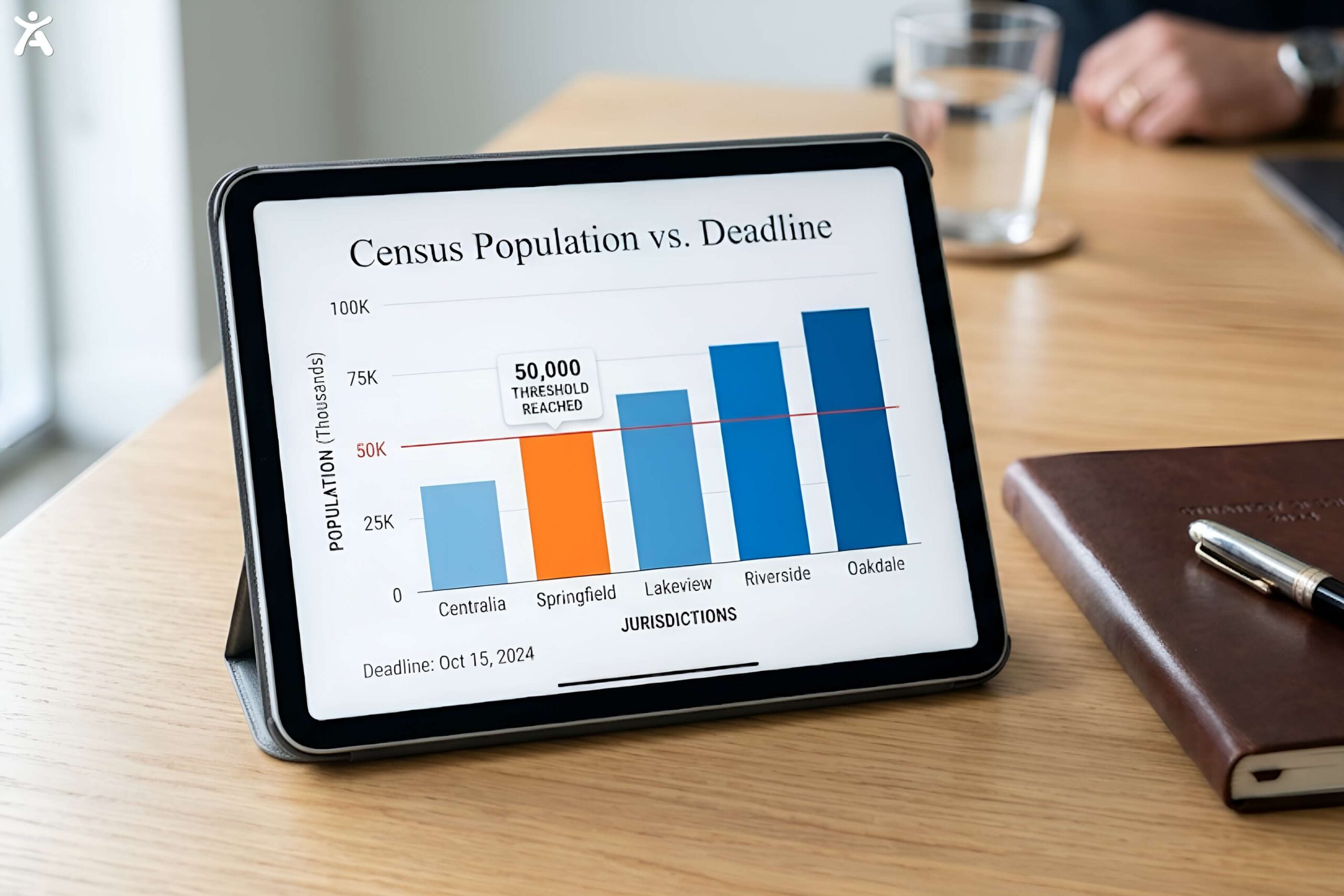
State and local government entities serving populations of 50,000 or more must comply by April 26, 2027. Entities serving fewer than 50,000 people, along with special district governments, have until April 26, 2028. Both deadlines were extended by one year through a Department of Justice Interim Final Rule published April 20, 2026. The technical standard did not change: covered websites.
Introduction
Four days before the original April 24, 2026 deadline, the Department of Justice pushed the clock back a full year. If your organization spent the spring in emergency compliance mode, the extension is real relief. But it is narrower than the headlines suggest. The DOJ changed the dates. It did not change the standard, the scope, or the underlying legal exposure that governments face for inaccessible digital services.
This guide breaks down exactly who is covered, what WCAG 2.1 AA actually requires, why the deadline moved, and what a realistic compliance timeline looks like for the next 12 to 24 months.
What Is the ADA Title II Web Accessibility Rule?
On April 24, 2024, the DOJ finalized a rule under Title II of the Americans with Disabilities Act requiring state and local government entiti08ake their web content and mobile applications accessible to people with disabilities. The rule adopted WCAG 2.1 Level AA, published by the W3C in 2018, as the binding technical standard.
Title II covers a broad range of public entities, including:
Who Counts as a “Public Entity” Under Title II
- Cities, counties, and townships
- State agencies and departments
- Public universities, community colleges, and K-12 school districts
- Transit authorities and public transportation systems
- Courts and judicial systems
- Public libraries
- Special-purpose districts (water, utility, mosquito abatement, zoning, and similar entities)
There is no size threshold and no revenue floor. If your organization is a state or local government entity, or you provide web content or mobile apps on a government’s behalf through a contract, license, or other arrangement, the rule applies to you.
The Updated 2027 and 2028 Compliance Deadlines
On April 20, 2026, the DOJ published an Interim Final Rule extending both compliance dates by one year:
| Entity Type | Original Deadline | New Deadline |
|---|---|---|
| Public entities with a population of 50,000 or more | April 24, 2026 | April 26, 2027 |
| Public entities with a population under 50,000, and special district governments | April 26, 2027 | April 26, 2028 |
The DOJ stated in the rule’s preamble that it “fully anticipates implementing the regulation at the new deadline.” Legal observers widely read this as a signal that enforcement will begin promptly once the new dates arrive, not as an indication that further delays are likely.
Why the Deadline Was Extended
The DOJ cited several reasons for the extension, based on its own review:
- Automated remediation tools cannot reliably fix complex content, particularly educational and STEM materials, without human review
- Many public entities, especially school districts and smaller municipalities, lack the staffing, budget, and specialized expertise to meet the original timeline
- Public entities faced significant litigation risk from being unable to complete remediation in time
- The rule’s 2024 version created legal uncertainty by incorporating external WCAG documentation by hyperlink rather than by static reference
How to Determine Your Entity’s Deadline
The population threshold is based on U.S. Census Bureau data. A few practical notes:
- Counties and municipalities use their own Census population figures
- School districts use the district’s population as calculated in the Small Area Income and Poverty Estimates
- Entities without their own Census population (such as many special districts) generally fall under the smaller-entity 2028 deadline
- If your entity is part of a larger government body, that larger body’s population may apply
If you are unsure which deadline applies, the ADA.gov resource center provides worked examples for counties, school districts, transit authorities, and special districts.
What WCAG 2.1 Level AA Actually Requires
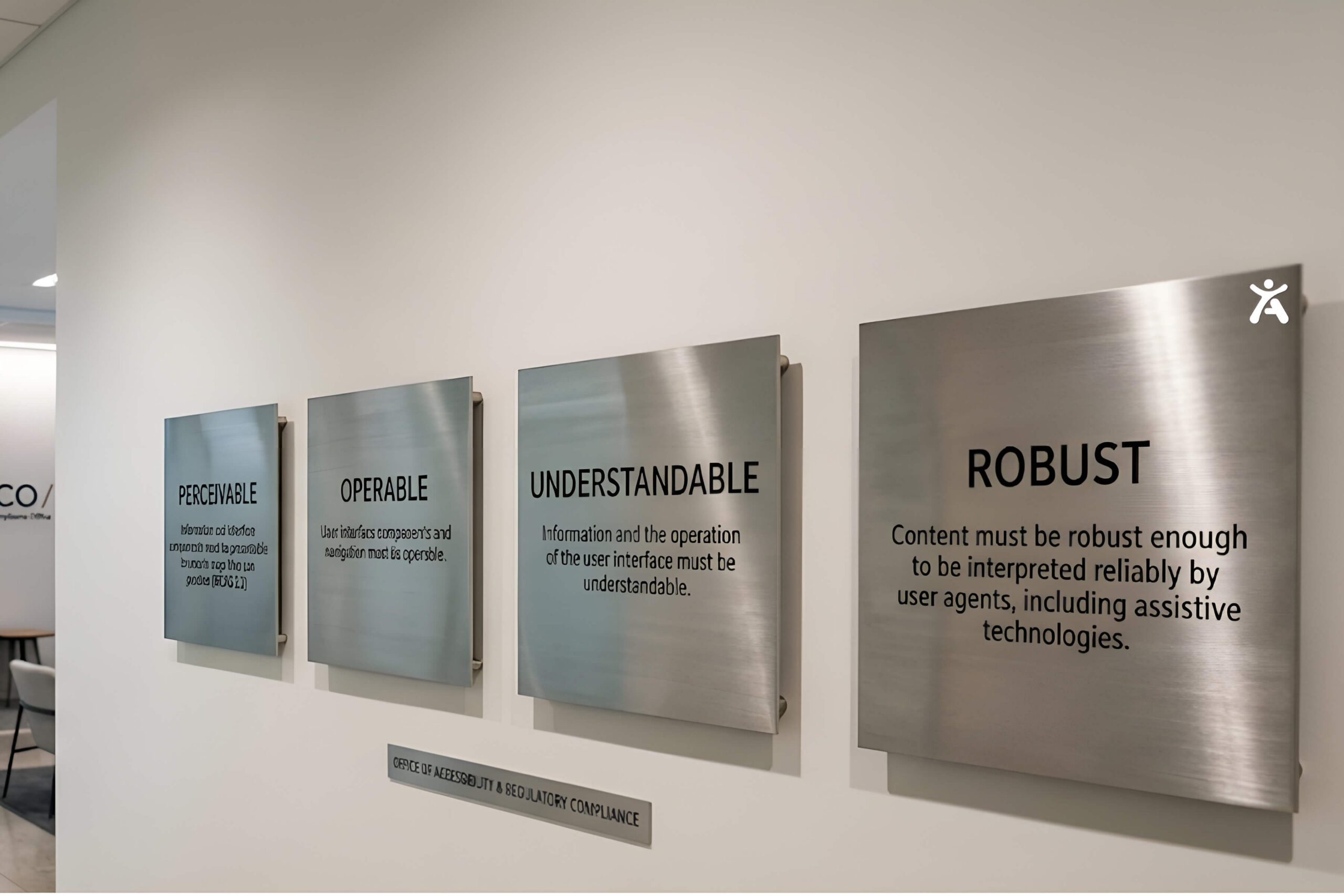
WCAG is not a law on its own. It is the technical standard that the ADA and Section 504 point to. WCAG 2.1 AA includes roughly 50 success criteria organized around four principles, often remembered by the acronym POUR:
- Perceivable: Content must be presentable to users in ways they can perceive, including alt text for images, captions for video, and sufficient color contrast
- Operable: All functionality must be available from a keyboard, with no content that causes seizures, and enough time for users to read and interact with content
- Understandable: Text must be readable, pages must operate in predictable ways, and forms should help users avoid and correct mistakes
- Robust: Content must work reliably with current and future assistive technologies, including screen readers
WCAG 2.1 specifically adds criteria beyond the older WCAG 2.0 standard that address mobile accessibility, low vision, and cognitive and learning disabilities.
What Content Is Covered
The rule applies broadly to web content and mobile apps that a public entity provides or makes available, directly or through a contractor, licensor, or other third party. This includes:
- Public-facing websites and web applications
- Electronic documents, including PDFs, posted or linked from covered web content
- Mobile applications
- Online forms, portals, and self-service tools
Limited Exceptions
A narrow set of exceptions exists, including for certain preexisting social media posts, some archived web content, and specific third-party content that a public entity does not control. These exceptions are interpreted narrowly. Most active, current web content must meet the standard.
Why This Deadline Extension Is Not a Reason to Wait
The dates moved. The obligations did not disappear. A few reasons the extension should not slow down remediation work:
- The underlying ADA obligation is independent of the rule’s compliance dates. Accessibility has been a requirement for government services since well before this specific rule.
- Private lawsuits do not depend on the DOJ’s timeline. Plaintiffs can and do file ADA claims citing the statute itself, along with state-level accessibility laws that carry their own deadlines and penalties.
- Several states already have independent, faster-moving accessibility laws, including statutes in Colorado, Minnesota, California, and New York that apply regardless of the federal timeline.
- DOJ enforcement carries real financial exposure. Title II allows for compensatory damages in addition to attorney’s fees, and DOJ civil penalties for violations can run into six figures.
- Remediation at scale takes far longer than most teams expect. Auditing every web property, testing with real assistive technology, remediating application code, retagging years of accumulated PDFs, and renegotiating vendor and procurement contracts is a multi-quarter undertaking even for well-resourced teams.
Treat the extra year as time to build a durable compliance program, not as a reason to pause one.
“Not sure where your site stands? Get a free WCAG 2.1 AA scan.”
A Practical Compliance Roadmap

Step 1: Confirm Your Deadline
Use your entity’s Census population figure to confirm whether you fall under the April 2027 or April 2028 deadline.
Step 2: Inventory Your Digital Properties
List every website, web application, mobile app, and significant PDF library your entity operates or provides through a vendor.
Step 3: Run a Baseline Audit
Combine automated scanning with manual testing using screen readers and keyboard-only navigation. Automated tools catch a meaningful share of issues but cannot reliably evaluate complex interactions, reading order, or the accuracy of alternative text.
Step 4: Prioritize by Impact
Fix barriers that block entire tasks first, such as forms that cannot be completed with a keyboard or navigation that traps screen reader users, before addressing lower-impact issues like decorative image alt text.
Step 5: Update Procurement Language
Require WCAG 2.1 AA conformance and a current accessibility conformance report from any vendor providing web content, software, or mobile apps on your entity’s behalf.
Step 6: Document Everything
Keep records of audits, remediation timelines, staff training, and vendor conformance reports. In litigation, documented good-faith effort is a meaningfully stronger position than an undocumented claim of compliance.
Step 7: Monitor Continuously
Accessibility is not a one-time project. New content, redesigns, and third-party embeds can reintroduce barriers. Ongoing monitoring keeps a government entity from drifting out of conformance between audits.
How Accessify Helps Government Entities Meet the 2027 and 2028 Deadlines

Accessify combines AI-powered scanning with real-time remediation to help state and local government teams close the gap between where their sites are today and WCAG 2.1 AA conformance, without requiring a full development cycle for every fix. The platform continuously monitors your public-facing sites, flags new barriers as content changes, and gives your team a clear, documented record of remediation progress, the kind of evidence that matters if a compliance question or complaint ever arises.
“Get regulatory deadline updates before they hit the news”
Get a free accessibility scan of your government website →
FAQ
When is the ADA Title II compliance deadline for state and local governments?
April 26, 2027 for entities serving 50,000 or more people, and April 26, 2028 for entities serving fewer than 50,000 people and for special district governments.
No. Title II covers state and local government entities. Title III covers private businesses that operate as public accommodations. Title II carries different enforcement mechanisms, including compensatory damages that are not generally available under Title III.
Entities that miss the deadline remain out of compliance with the rule and face continued exposure to private lawsuits, state law claims, and DOJ enforcement action, including civil penalties.
No. Private ADA lawsuits and state-level accessibility laws continue to apply regardless of the federal rule’s timeline.
ADA gov’s resource center for state and local governments provides step-by-step guidance and worked examples for counties, municipalities, school districts, and special districts.